
Thomas Frank, Tottenham and the Thin Line Between Patience and Panic
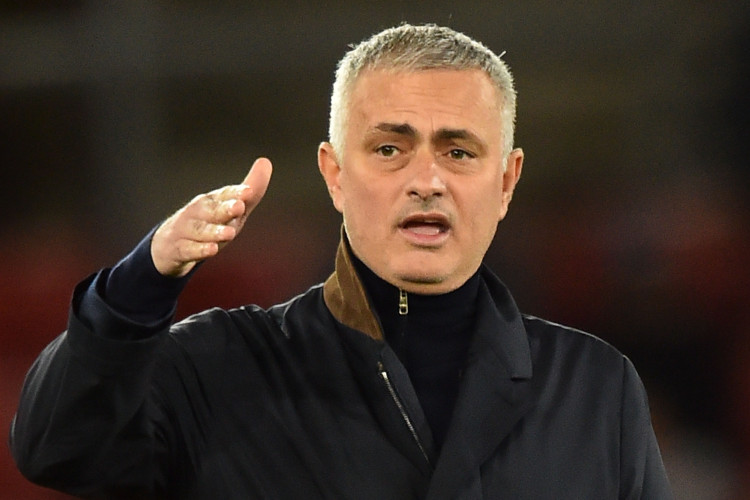
Thomas Frank arrived at Tottenham in June 2025 tasked with rebooting a club coming off the strangest of seasons: European triumph paired with domestic turbulence. He was appointed head coach on a deal through 2028 after leaving Brentford, inheriting a squad still processing dramatic swings in form and momentum.
The backdrop was stark: a UEFA Europa League win under Ange Postecoglou and, in the same campaign, a 17th‑place league finish that forced a reset of priorities. Early flashpoints have come quickly, most notably the home defeat to Fulham and the crowd’s reaction to Guglielmo Vicario’s error.
Frank’s firm stance that in‑game boos cross a line has framed his call for unity around a fragile team. With ownership support reaffirmed and a demanding week on the horizon, his tenure sits at the intersection of patience and proof.
Pressure and backing
The mood is tense, but indications from both reporting and the head coach suggest his position is not under immediate threat, even amid a poor run. Frank has expressed confidence in ownership support, while the coming fixtures are seen as important rather than definitive for his job security.
Fans and fallout
After Fulham’s second goal, sections of the Tottenham support booed Vicario during play, amplifying an already fractious atmosphere at home. Thomas Frank criticised those in‑game boos and later clarified that post‑match criticism is fair, but unity is required while the ball is rolling.
The incident strained relations yet also prompted visible leadership on the pitch, with the captain guiding team‑mates to face the crowd together at half-time.
Tactics and top four
On the pitch, Tottenham have looked stretched in build‑up and vulnerable in transition, with a press that opponents have bypassed too easily in recent weeks. Even a more attacking selection against Fulham failed to control counters, underlining structural issues that feed soft concessions.
The squad still carries top‑four‑level talent featuring James Maddison, Dejan Kulusevski, Micky van de Ven, Cristian Romero, Pedro Porro, and rising midfielders Archie Gray and Lucas Bergvall. However, that quality must be knitted into a more compact model. Turning talent into consistency is a big ask off the back of last season’s 17th‑place finish.
Thomas Frank’s Tottenham tactics have become a familiar pattern
Under Thomas Frank, Tottenham’s biggest tactical flaws have been most brutally exposed in games like the 2-1 home defeat to Fulham. Tottenham tried to go front-foot with Archie Gray and Lucas Bergvall in the XI, yet Fulham sliced through a stretched press to score twice inside six minutes, the earliest Spurs have ever gone 0-2 down in a Premier League match.
Sky’s numbers painted the rest of the picture: by half-time, Spurs had not managed a shot on target and had generated an expected-goals figure close to zero, which matched the impression of a team passing slowly in front of Fulham’s block without any real threat between the lines.
That Fulham game was not an outlier but a symbol of a wider pattern at home. BBC analysis notes that Tottenham have scored only seven times in six home league matches this season and produced just 18 shots on target, a total better than only Burnley, while sitting near the bottom of the division for through balls played.
The numbers back up what supporters see
Long spells of horseshoe passing, an over-reliance on hopeful crosses and too few runners attacking central spaces, which leaves even elite forwards like feeding on scraps has been the pattern for Tottenham under Thomas Frank.
Frank has not ducked those issues. In a recent interview he accepted that Spurs are only “okay” so far at making coordinated runs beyond the last line and said he wants more bodies timing their movement into the box if the team is to become truly dangerous in possession.
After Fulham, he described the opening spell as unacceptable and admitted his players had made life far too easy for the visitors with their decisions on the ball and their spacing out of possession.
The frustration of that performance spilled into the stands when Guglielmo Vicario was booed, prompting Frank to tell BBC that anyone who targets their own goalkeeper during the game is not behaving like a real Tottenham supporter and that such reactions are not acceptable if the team is to rebuild confidence.
Are Tottenham fans realistic with their expectations of a top four challenge under Thomas Frank?
No, expecting a top‑four finish immediately after ending 17th is more hopeful than realistic, even for a club of Tottenham’s size. A top‑six push and clear league improvement are fair demands; treating anything less than UEFA Champions League as failure is not.
Spurs came 17th last season with 38 points, their lowest top‑flight finish in almost half a century, and lost 22 league games, equalling a club record for defeats in a season. Analysts have described them as statistically the weakest Premier League side ever to qualify for the Champions League, underlining how far their domestic level slipped despite Europa League glory. That is not the usual platform from which teams launch straight into a top‑four challenge.
What the numbers say about top four
Pre‑season odds gave Spurs roughly a one‑in‑six chance of making the top four, with at least seven clubs rated more likely, reflecting both the 17th‑place hangover and the strength of rivals.
Season previews framed UEFA Champions League qualification as an outside possibility, with most neutral projections focusing on stabilising in the Premier League and edging back towards the top six rather than leaping straight into the elite bracket.
Thomas Frank at Tottenham: A more realistic expectation
Given the starting point, realistic Tottenham fans should probably ask for in the rest of the season under Thomas Frank: a big jump in points, a return to the top half (ideally top six), a clearer tactical identity and decent progress in cups and Europe.
Wanting the team to “have a go” at the top four is understandable, but demanding it now, after a 17th‑place campaign, is ahead of where the underlying performance levels and wider league context suggest this squad should be.
Conclusion
Tottenham’s expectations under Thomas Frank need recalibrating in the short term: pushing straight back to the top four is aspirational, not inevitable, for a team emerging from a 17th‑place league finish and still absorbing a new game model.
Frank’s public defence of his goalkeeper can be a turning point if it becomes the moment the dressing room and stands reconnect around shared standards: criticise after, but stay together during the contest. The tactical brief is clear and urgent: tighten distances between lines, simplify first‑phase build‑up, and choose pressing moments more selectively to stem transitions that have repeatedly hurt home form.
There is enough talent here to build a resilient, progressive side, yet proof must now arrive in performances rather than promises during what has been framed as a significant, if not definitive, week.
Is Thomas Frank the right man for Tottenham? His conviction, communication, and history of coherent structures point to yes, provided he gets the runway that ownership has, for now, publicly underlined. Give him time to stabilise, mend the bond with supporters, and lay a sturdier tactical base; only then will a top‑four push feel realistic rather than romantic.
Comment / Reply From
You May Also Like