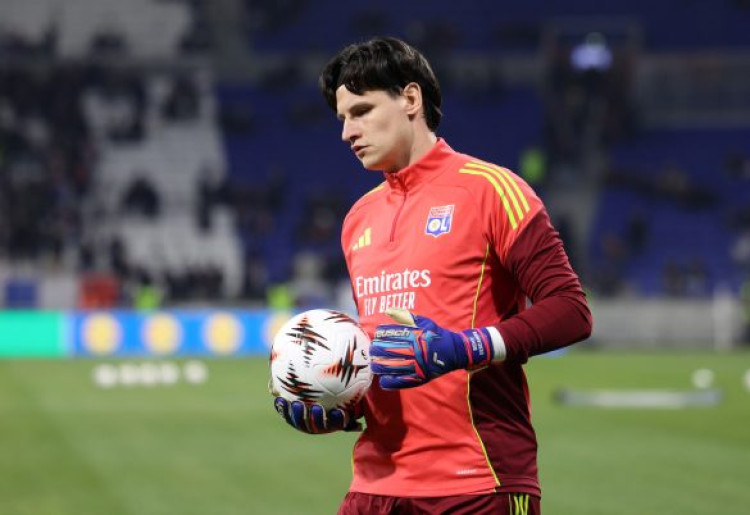


Freiburg’s Derry Scherhant reflects on remarkable rise from early Berlin struggles to Germany national team
Derry Scherhant’s first senior Germany camp ended with two starts, two encouraging performances and an opportunity to reflect upon just how improbable his route to the Nationalmannschaft once appeared.
The 23-year-old emerged as one of Germany’s most dangerous players during Sunday’s 0-0 Nations League draw with Greece in Thessaloniki. Scherhant repeatedly attacked from the left, created Jonathan Burkardt’s disallowed first-half goal and continued posing problems after the break.
The performance followed an equally fearless senior international debut in Germany’s 2-0 victory over Serbia, during which Scherhant operated on both wings and immediately demonstrated many of the qualities that convinced Jürgen Klopp to include him in his enormous first Germany squad.
For anyone acquainted with Scherhant’s recent rise at SC Freiburg, that part makes sense. The route he travelled before reaching the Bundesliga is considerably less conventional.
“Yeah, it’s totally crazy when I look back on it,” Scherhant replied when asked about his career path in the mixed zone following the Greece draw. “[Back then in Berlin], the dream was just to go pro. That feels like a long time ago.”
2017: Minutes already difficult to find
Scherhant’s development did not follow the familiar route of a highly prized academy prospect moving smoothly through the age groups of one major club.
“In 2017, I was playing for Viktoria Berlin, and not playing much,” Scherhant recalled.
The Berlin native had spent his formative footballing years moving around the capital rather than establishing himself inside one of Germany’s major Nachwuchsleistungszentren. That distinction matters when considering where he eventually ended up.
He simply wanted to become a professional footballer.
2019: Tennis Borussia provides no immediate breakthrough
A move to Tennis Borussia Berlin followed in 2019. Again, Scherhant did not immediately emerge as a player destined for international football at his second Berlin club.
“In 2019, I moved to Tennis Borussia [Berlin] and wasn’t playing much there either,” he said. “Then there was Berliner SC. The clock was indeed ticking.”
The chronology helps explain why Scherhant now looks back at that period with a certain degree of disbelief. There was no obvious acceleration toward professional football. By his own account, playing time remained difficult to secure at two successive Berlin clubs.
Berliner SC would nevertheless become the short bridge that changed the trajectory.
2020: Berliner SC, COVID and an unlikely opening
Scherhant joined Berliner SC during the extraordinary footballing circumstances created by the COVID-19 pandemic. The disruption was enormous, particularly below the professional levels. Training schedules, competitions and the normal mechanisms through which young footballers established themselves were repeatedly interrupted.
The sequence was unusually compressed. Scherhant moved from Tennis Borussia to Berliner SC during the summer of 2020. COVID-related changes kept the relevant transfer period open long enough for another opportunity to emerge toward the end of September. Hertha acted.
Hertha BSC officially added Scherhant to its academy in October 2020. What might otherwise have been another season spent trying to climb through Berlin’s lower levels instead became his first opportunity inside a Bundesliga academy.
The player who had not followed a conventional NLZ pathway had finally found his way into a Bundesliga academy at 18.
“Without the extended transfer window, I would not have made it,” Scherhant emphasized in the mixed zone last night.
2020-22: Hertha move rapidly changes everything
Once Scherhant entered Hertha’s system, the developmental timeline accelerated sharply. He spent only half a season with the U19s before advancing into the U23 side. His first full senior campaign in the Regionalliga Nordost yielded 16 goals and eight assists across 34 appearances. Hertha rewarded him with his first professional contract in June 2022.
A Bundesliga debut followed shortly afterwards. The Berlin native’s first top-flight goal arrived against Borussia Mönchengladbach during Hertha’s chaotic 2022/23 relegation campaign. Regular minutes remained difficult to find, but relegation ultimately created more room for Scherhant to develop in the 2. Bundesliga.
That phase eventually produced his first meaningful Germany recognition. In March 2025, Scherhant received a late call-up to Antonio di Salvo’s Germany U21 squad. The national-team pathway had finally opened.
2025: Freiburg provide the next platform
SC Freiburg moved soon afterwards, activating a reported €2m clause and giving Scherhant a more stable Bundesliga environment in which to continue developing. Even there, the progression was not immediate. Vincenzo Grifo initially blocked Scherhant’s preferred route into the starting XI on the left. The younger attacker therefore had to expand his game.
Then came Klopp.
September 2026: “Hi, this is Jürgen Klopp”
Scherhant was one of 11 uncapped players included in Klopp’s extraordinary 44-man first Germany squad. The Bundestrainer had already explained what attracted him. Klopp described Scherhant as possessing a “really exciting profile”, highlighting a player capable of combining direct dribbling with aggressive movement toward goal rather than fitting neatly into one winger archetype.
Scherhant initially found the entire situation difficult to process. He called the nomination “more than a dream come true” before immediately producing one goal and one assist against Eintracht Frankfurt in the Bundesliga that weekend. That performance also produced another useful detail about how the call arrived.
“Hi, this is Jürgen Klopp,” the message began.
Scherhant called the new Germany coach back immediately.
October 2026: Two starts for Germany
A few weeks later, the player once struggling for minutes at Viktoria and Tennis Borussia started successive senior internationals for Germany. Against Serbia, Scherhant attacked his debut without hesitation. Five shots, constant direct running and work on both flanks helped make him one of the understated performers in Klopp’s first victory as Bundestrainer.
Scherhant started again and produced an even stronger individual display against Greece in the current break’s final Nations League fixture. His dribbling, runs in behind and willingness to shoot made him Germany’s most persistent attacking outlet for much of the evening. His low delivery should have provided Burkardt with a first senior international goal before Tom Bischof’s earlier handball caused the effort to be disallowed.
Scherhant nevertheless departed the XXL camp having made precisely the sort of impression required to remain in the conversation when Klopp dramatically reduces his squad in November. The footballing case is one thing. For Scherhant, the personal meaning remains something else entirely.
“Now I’m standing here five or six years later with the privilege of playing for the German national team,” he said. “This is more than just a dream. It’s incredible and not something I’ve fully comprehended yet. I’m more than grateful.”
Comment / Reply From
You May Also Like