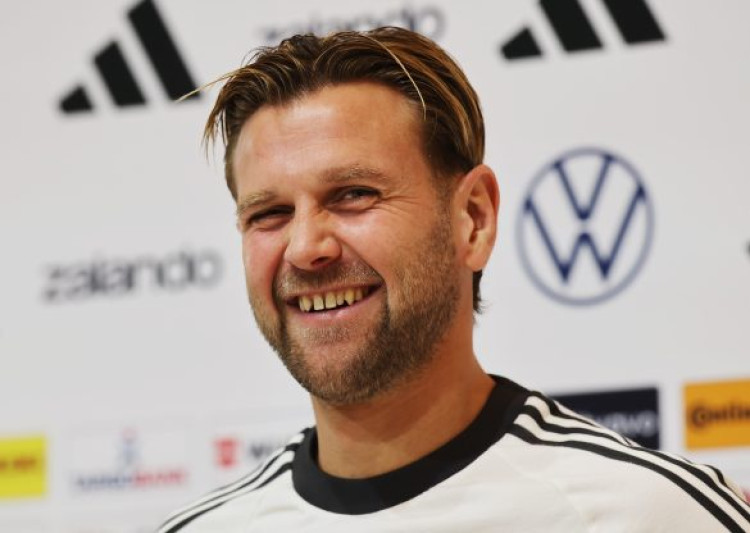
Niclas Füllkrug smiles his way through age debate and Harry Kane comparisons at DFB press event
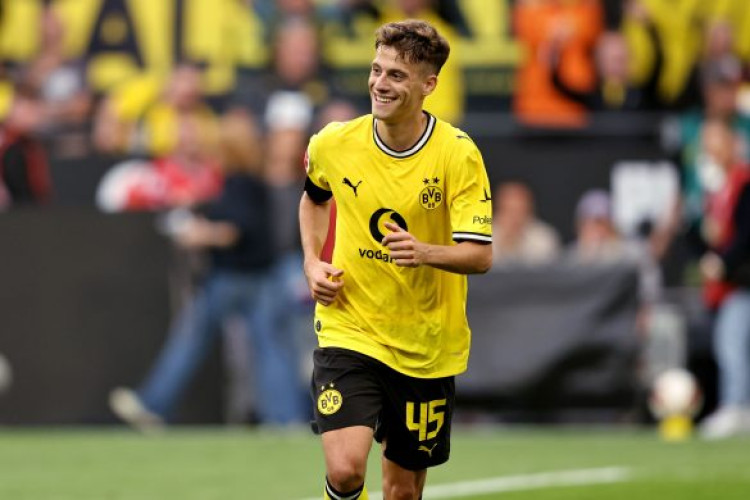
Newly recalled Germany international Niclas Füllkrug has addressed concerns about his age and reflected on the changing demands placed on experienced centre-forwards. Speaking at Tuesday’s DFB press conference in Herzogenaurach, the 33-year-old Werder Bremen striker drew on the example of childhood idol Miroslav Klose while discussing his own development and the importance of experience in attacking positions.
Füllkrug’s return to the national team comes after an impressive start to the Bundesliga season, during which he has scored nine goals for Werder Bremen. His performances earned him a recall from Germany head coach Jürgen Klopp, despite the latter previously expressing reservations about the striker’s long-term prospects.
Speaking in October, Klopp noted that Füllkrug was already 33 and explained that while he could help Germany in the present, his suitability over the longer term remained uncertain. Klopp has since walked back the comments, while Germany’s all-time leading goalscorer subsequently came to Füllkrug’s defence.
Speaking to RTL earlier this month, Klose noted that he himself had played until the age of 38 and won the World Cup at 36, describing himself as a fitting example of how strikers can remain productive well into their thirties. Klose also praised Füllkrug’s goalscoring ability, presence on the pitch, and willingness to lead by example.
“My age is a fact,” Füllkrug answered in response to the first question he fielded about his age. “But I found it very interesting what Miro [Miroslav Klose] said about that. Miro was one of my idols as a kid. I got a chance to see him [compete] when he was 36, 37, 38. He won the World Cup at 36. I found it interesting what he said on the matter, and he speaks from experience.”
“When the Bundestrainer made his comment [about my age], I didn’t take offense to it at all,” Füllkrug continued. “The Bundestrainer has many tasks before him, and one of them happens to be, in our [Germany’s] current situation, to find and develop younger players. I find it basically positive that we have a lot of [young] strikers making an impression with their clubs.”
Füllkrug speaks on Harry Kane and modern forwards
Füllkrug also addressed questions about his evolving responsibilities at club level, particularly his tendency to drop deeper into midfield and participate more extensively in Werder Bremen’s attacking build-up.
The striker was asked whether his recent performances reflected the influence of Bayern Munich’s Harry Kane, whose ability to combine traditional centre-forward responsibilities with creative work in deeper positions has become an important feature of his game.
Füllkrug rejected the suggestion that he had recently adapted his playing style to emulate the England international. Instead, he explained that his tactical responsibilities depend primarily on the strengths of his teammates and the tactical demands of different teams.
“I’m playing the way I’ve been playing for a few years now,” Füllkrug told Florian Plettenberg. “It’s just more noticeable because I’m currently playing for a team that I can help out [with my deep drops].”
“When I was playing for AC Milan and Adrien Rabiot and Luka Modric were playing behind me, they took care of it,” Füllkrug continued. “They had the solutions. They didn’t need me in the No. 10 slot or farther back. We entered most games as the favorites and always had more ball possession. It was a lot like that at BVB.”
“At Werder, we’re not the favorites in most games,” Füllkrug concluded. “It’s thus important that we all take as much responsibility as possible all over the pitch. I believe I have the quality to play football in these areas [of the pitch] as well. Accordingly, I’m happy that it’s being observed and recognized. Strikers can contribute a lot outside of scoring goals.”
Füllkrug explains why experienced forwards can improve with age
The Germany international also offered a broader assessment of why certain strikers reach their peak later in their careers. Füllkrug was asked whether his relatively late emergence at senior international level reflected a wider pattern also evident in the careers of Deniz Undav and Tim Kleindienst, both of whom established themselves in Germany’s national team after gaining extensive experience in domestic football.
Rather than considering advancing age an inherent disadvantage, Füllkrug argued that the technical and psychological demands of the centre-forward position can reward accumulated experience.
“I do believe that is the case to a certain extent,” Füllkrug answered when asked whether the late international debuts of players such as Undav and Kleindienst reflected a broader pattern. “Because so much about this position is mental. There’s reaction speed, timing, experience, and a ‘feel’ for things.”
“Naturally, the longer you’ve racked up consistent playing time and the more games you’ve assembled, the better your feel for certain situations will be,” Füllkrug continued. “You’ve been in these situations before. You know how the defenders move, and you’re more effective at utilizing your strengths. I don’t think any of the players you listed were great speedsters who lost their best weapon with age.”
“We [Germany] have always had strikers who put in top performances at a later age,” Füllkrug concluded. “I mentioned that [with Miroslav Klose] at the beginning. Internationally, there are always many strikers who are performing at the top level in their late 30s, and yet age is still an issue. For me, it’s not an issue. I don’t feel 33, and when I read about people saying that I’m ‘already 33’, I just have to say, ‘That really can’t be that bad’.”
Comment / Reply From
You May Also Like