
Are Liverpool running on thin ice under Andoni Iraola?
Liverpool’s back-to-back wins have eased concerns, but Andoni Iraola must fix key weaknesses before the Reds can challenge the Premier League’s best.
Liverpool have steadied themselves with back-to-back victories over LASK and Brentford, but the recent improvement has not removed every concern surrounding Andoni Iraola’s team.
The results have offered relief, yet they have also raised a more important question. Is the Spaniard building a side capable of moving closer to the Premier League’s strongest teams, or is Liverpool’s progress still being carried by individual moments?
The 6-3 Champions League victory over LASK showed the attacking power available to Iraola, while the hard-fought win at Brentford demonstrated character after a difficult defeat to Manchester City. Liverpool’s response has been positive, but the performances remain uneven.
Their ability to score freely against LASK was encouraging, although the defensive problems exposed in Austria also suggested that the team is still searching for balance.
That is why Liverpool’s current position feels more complicated than a simple run of results. The squad has enough quality to believe that Iraola can raise the team’s level, but there are also enough weaknesses to suggest that the club is operating without much room for error. At present, the Reds are not in crisis, but they are close enough to danger for every tactical concern to matter.
The Manchester City defeat exposed the cracks
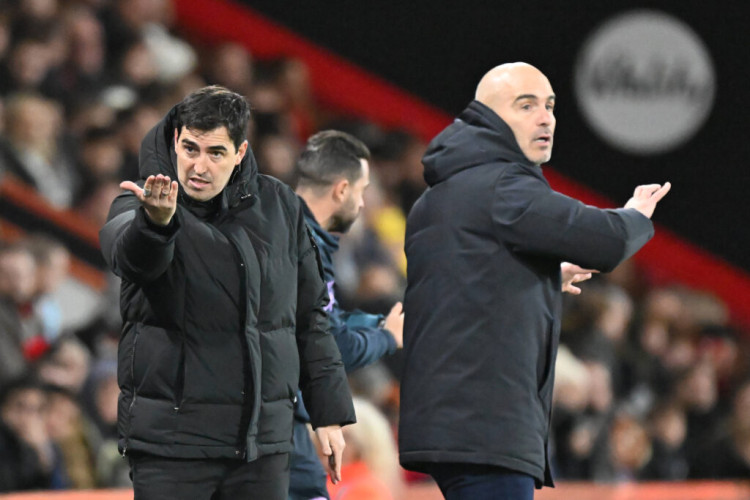
Liverpool’s first defeat of the season came against Manchester City at Anfield, and the scoreline became more damaging after Ryan Gravenberch was sent off.
The Dutch midfielder had already played well before receiving his second yellow card, and City’s dominance came after his dismissal. That fact gives Liverpool a reasonable defence, but it should not completely hide what happened before the red card.
There was an argument that Liverpool were the better team for long periods while the match remained level. They moved the ball with confidence, reached promising positions and kept City from controlling the contest. However, they rarely looked capable of producing the decisive moment. The build-up often stopped before it became a genuine chance, and the final action did not match the quality of the earlier work.
That distinction matters. A team can appear dominant without creating enough danger to win a major match. Liverpool were active in possession, but their attack lacked the sharpness needed to turn pressure into goals. Had both sides remained at full strength, it is possible the same pattern would have continued.
The collapse after Gravenberch’s dismissal revealed another concern. City only needed a small opening to take control, and Liverpool struggled to respond once the match moved away from them. The atmosphere around City, along with the wider controversy surrounding the club, may have made the defeat feel more dramatic, but Liverpool’s reaction to pressure was still troubling.
Iraola has not yet proved that he can guide Liverpool through the biggest occasions. A defeat by City alone should not define his time at the club, particularly when the red card changed the match. Yet the game provided an early test of his team’s ability to remain calm, create chances and compete with a leading rival. Liverpool passed some parts of that test, but failed the most important one.
Andoni Iraola’s ‘big’ midfield problem
The midfield may be the area that requires the quickest solution. Iraola has talented players at his disposal, including Gravenberch, Alexis Mac Allister, Dominik Szoboszlai and teenage prospect Trey Nyoni. The issue isn’t a shortage of talent; it’s structural.
Liverpool’s midfield combinations have changed regularly, with the shape and personnel often shifting from one match to the next. Some rotation has been forced by injuries and suspensions, but not every adjustment can be explained that way. The team has not settled on a best pairing or clear responsibilities for each midfielder.
This uncertainty affects the whole side. If the midfield cannot protect the defence, support the press and move the ball forward at the right speed, Liverpool become stretched. The forwards are then asked to create from difficult positions, while the defenders face larger spaces whenever possession is lost.
Mac Allister can offer control and intelligent passing. Gravenberch brings athleticism and the ability to carry the ball through pressure. Szoboszlai offers energy, shooting and movement, while Nyoni represents a younger option with the freedom to play without fear. The challenge is finding a combination that gives Liverpool both protection and creativity.
A title contender cannot constantly experiment with its central structure. Iraola may eventually settle on a midfield pair or a three-man unit, but he cannot continue changing the central structure without a clear long-term plan. Stability would not solve every problem, but it would give the rest of the team a reliable foundation.
The Florian Wirtz-shaped hole

Florian Wirtz remains Liverpool’s most difficult tactical question. The German arrived with the profile of a world-class creator, and the club invested heavily because they expected him to become the attacking reference point. Yet his role under Iraola has remained unclear, and that uncertainty has affected both the player and the team.
Wirtz often operates as a No. 10 behind the striker, but that position creates demands elsewhere. With two wingers also looking to attack, the deeper midfielders must cover large areas and protect Liverpool during transitions. If they cannot do that, the team becomes vulnerable. If Wirtz moves deeper, Liverpool may lose the player’s influence near the penalty area.
The problem is not simply that Wirtz has struggled to score or assist regularly. It is that Liverpool have not found a convincing way to make his strengths fit the structure. He occupies an unusual space in a team that has become direct and aggressive over the years. Liverpool remain dangerous when attacking the ball and creating fast opportunities, but they do not always provide Wirtz with the combinations he needs.
That makes the situation more serious than a player suffering through a quiet spell. Liverpool signed Wirtz to supply imagination in difficult matches, particularly when opponents defend deep or when the first plan stops working. If he is not comfortable in the system, the team loses its most expensive creative solution.
There are also limited alternatives. Liverpool cannot simply remove Wirtz and expect another player to provide the same quality. They could change the formation, place him in a different area or create closer relationships around him, but each option would affect other parts of the team.
The victory over LASK offered a glimpse of what Wirtz can provide, and his assist in that match was an encouraging sign. The later improvement against Brentford also suggested that a more flexible attacking shape could help him. Iraola must now decide whether those changes form part of a genuine solution or were only temporary responses to the match situation.
Time is not unlimited
Liverpool do need time under Iraola, but the club cannot hide behind the word “transition” for too long. This is not a team starting from the bottom. Liverpool won the Premier League only a little over a year ago, and the club have continued to make significant investments in the squad.
The decline in quality, if there has been one, requires careful examination. Some players may need time to adapt to Iraola’s methods, while others may be struggling because the structure around them is unsettled. A new manager should be allowed to develop his ideas, especially when he has inherited a squad with several important changes.
Iraola also deserves time to prove that he can manage a club of Liverpool’s size. His work has earned him the opportunity, but Liverpool are different from the clubs he has previously managed. The demands are greater, the scrutiny is constant and every dropped point is judged against the standards set by the strongest teams in England and Europe.
His friendship with Mikel Arteta may provide a useful comparison. Arteta also needed time before his ideas became consistent at Arsenal, but the pressure at Liverpool remains intense because the club’s expectations are so high. Iraola must show that he can develop the team without allowing the season to drift away.
Results cannot be separated from the process. Liverpool may not need to win the league immediately, but they must remain close enough to the leading group to show that their ambitions are realistic. A poor run would create pressure that could make development even harder.
Settled progression is the need of the hour
Liverpool’s recent wins have brought welcome calm, but they have not answered the questions raised by the defeat to Manchester City. The team has enough attacking quality to produce spectacular performances, as shown by the win over LASK, and enough resilience to fight through difficult league matches such as the contest at Brentford. However, flashes of strength are not the same as sustained progress.
Iraola must find a settled midfield, because Liverpool cannot challenge at the highest level while the central structure remains uncertain. He must also solve the Wirtz problem, whether that means changing the formation, adjusting the player’s position or building better connections around him. The German’s struggles are not an isolated issue; they affect Liverpool’s ability to unlock strong opponents.
Time should be granted to a new manager, but patience must be matched by progress. Liverpool are too established, too heavily invested and too recently successful to treat the season as an open-ended rebuild. Iraola does not need to copy the past, but he must prove that his team is moving towards a higher level rather than simply surviving from one result to the next.
For now, Liverpool are not falling apart. They are running on thin ice, though, and the next few months will show whether Iraola can strengthen the surface beneath them or allow the cracks to widen.
Comment / Reply From
You May Also Like