
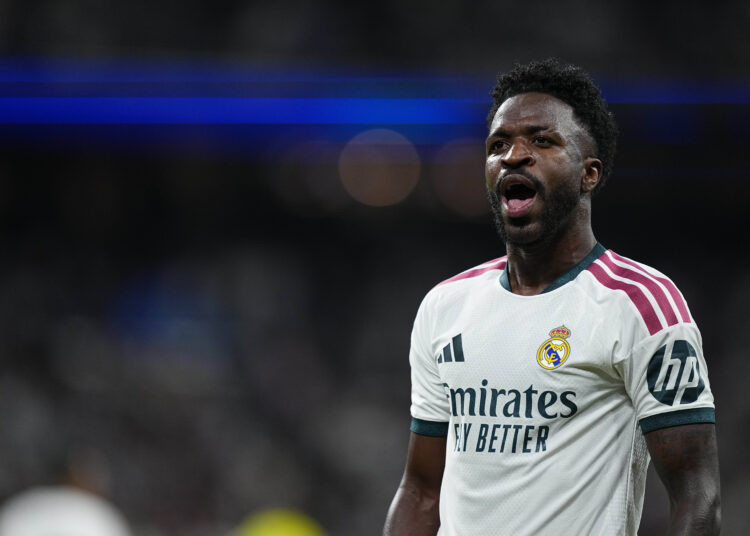
Vinicius Junior’s four-match ban could be exactly what Real Madrid need
Real Madrid have lost Vinicius Junior for four matches and, strangely, that might be the best thing to happen to their attack this season.
Losing Vinicius Junior for four league matches would normally be treated as a crisis at Real Madrid. Yet, given the Brazilian’s struggles this season, Jose Mourinho may quietly view the suspension as a chance to reset an attack that has looked unbalanced for too long.
A punishment with a twist
Vinicius’ dismissal against Villarreal was as needless as it was damaging. Introduced from the bench, he thought he had scored, only for VAR to show that he had pulled Nathan Saliba’s hair in the build-up. The goal was ruled out, the red card followed, and his angry reaction towards the officials added two further matches to an initial two-game ban.
The consequence is severe: Vinicius will miss LaLiga fixtures against Sevilla, Barcelona, Racing Santander and Valencia, including El Clasico on 25 October. Mourinho was furious that the decision was announced only two hours before Madrid’s Champions League meeting with Roma, calling the timing “shameless”.
But strip away the frustration, and the footballing argument is difficult to ignore. Vinicius has scored once in ten appearances this season, and that goal arrived when Madrid were already ahead against Real Sociedad. For a player who is almost always selected when available, that is a worrying return.
Why Madrid have persisted
Vinicius remains one of the first names on Mourinho’s teamsheet when fit. His reputation, his ability to decide big matches and the sheer weight of expectation around him have meant that Madrid have continued to build around him even when his form has dipped.
That patience has not been rewarded. He has failed to complete 90 minutes in each of Madrid’s last five matches, with early withdrawals against Roma and Atletico Madrid, a 68th-minute substitution against Elche, a red card against Villarreal and a late cameo against Rayo Vallecano.
Against Roma, the problem was laid bare. In 59 minutes, Vinicius registered no shots, no shots on target, no completed dribbles and lost possession six times. He touched the ball only 22 times, and a careless heel flick helped spark Roma’s second goal.
Mourinho had hoped the Brazilian would respond to the suspension news with a performance. Instead, Madrid improved after he went off, scoring three times in the final ten minutes to win 4-3.
The Roma lesson
The comeback in Rome offered Mourinho more than three points. It offered evidence that Madrid’s attack can function with greater energy and variety when Vinicius is not on the pitch.
Carlos Espi scored to make it 3-2, Endrick headed in the equaliser after replacing Vinicius, and Antonio Rudiger completed the turnaround. Endrick, in particular, made the most of his half-hour, contributing a goal and an assist while bringing urgency from his first touches.
Espi’s numbers make an even stronger case. The young Spaniard has three goals in just 38 minutes of football this season, and each strike has mattered. Mourinho has repeatedly been able to call upon him and receive a response.
That is precisely the sort of competition Vinicius has not faced often enough. When a player knows he will start regardless of form, the incentive to fight back into shape can fade. A four-match absence changes that dynamic.
A more flexible front line
Vinicius’ absence also frees Mourinho from a tactical problem. The Brazilian and Kylian Mbappe have too often drifted into the same left-sided areas, crowding one another rather than complementing each other.
Without Vinicius, Mbappe can operate from the left, where he can cut inside, combine with midfielders and still attack the penalty area. Alternatively, Mourinho can use him centrally and give a wide role to Yan Diomande, who has begun to establish himself after starting ahead of Vinicius against Villarreal.
A front three of Diomande, Mbappe and Endrick is particularly intriguing. Diomande can play on either flank, Mbappe can alternate between the left and the central role, and Endrick can lead the line or drift wide. That fluidity could make Madrid less predictable than they have been with Vinicius and Mbappe competing for the same space.
Brahim Diaz should also benefit. He has been involved in only four of Madrid’s ten matches this season, starting just twice, despite an impressive showing against Inter Milan earlier in the campaign. More minutes now would allow Mourinho to judge whether Brahim can provide the creativity and movement the attack has lacked.
A chance for Vinicius Junior, too
This should not be framed purely as an opportunity for everyone else. It is also a chance for Vinicius to step away from the noise, train properly and confront the decline in his performances. His apology after the red card was a start, but actions in training and upon his return will matter far more.
If Endrick, Espi, Diomande or Brahim take their chance, Vinicius will return to a squad where his place is no longer automatic. That pressure could be the making of him. Madrid need the explosive, decisive Vinicius of old, not a player surviving on reputation.
A blessing in disguise
Missing El Clasico hurts, and no one at the Bernabeu will pretend otherwise. Barcelona away, or at home, is the sort of occasion where Vinicius has often produced his best football.
Yet Madrid’s immediate priority is form, balance and confidence. Four league matches without their struggling number seven may allow Mourinho to rebuild the attack, reward players who have earned opportunities and discover a system that gets more from Mbappe.
Sometimes a punishment arrives at precisely the moment a team needs a shake-up. For Real Madrid, Vinicius’ ban may prove to be less of a setback and more of a timely reset.
Comment / Reply From
You May Also Like