
Merlin Röhl discusses new ‘Life with Everton’ photo book and more in extended interview
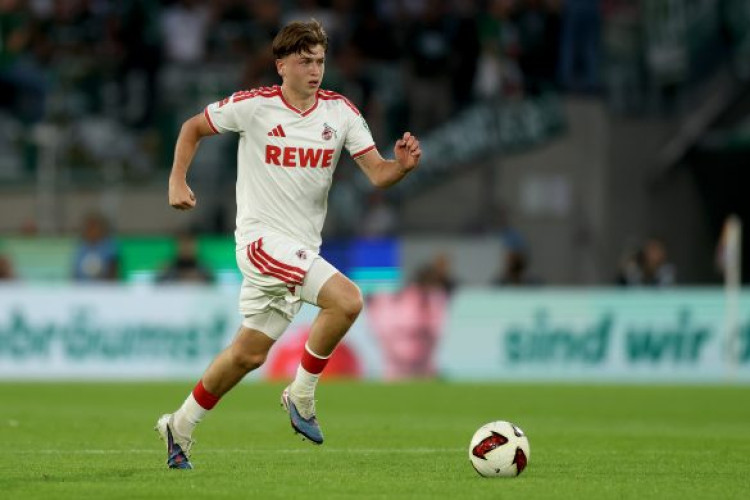
Germany U21 veteran Merlin Röhl appears finally to be finding his feet in English football. The former SC Freiburg midfielder endured a difficult first season after moving to Everton in September 2025, with injuries and the considerable adjustment associated with moving abroad limiting his impact. A little over a year since departing the Bundesliga, much has changed.
Everton – as expected – ultimately made the deal permanent. Meanwhile Röhl has begun establishing himself under David Moyes in an entirely new role. The 24-year-old has featured at right-back, developed close working relationships with club legends Leighton Baines and Seamus Coleman and increasingly feels at home on Merseyside.
Speaking at length in an extended interview published in the Thursday print edition of Kicker, Röhl addressed virtually every aspect of the experience. His comments range from Everton’s strong start and his positional conversion to the culture of English football, Florian Wirtz’s difficult time at Liverpool and former Freiburg teammate Johan Manzambi’s own move to the Premier League.
They also make clear just how different Röhl himself is from the player who left Freiburg.
Röhl embraces unlikely Everton right-back role
Versatility has always ranked among Röhl’s defining traits. At Freiburg, however, the Potsdam native still regarded himself primarily as a central midfielder. He openly admits that conversations sometimes took place because he preferred playing as a No. 8. That attachment to one position has disappeared.
“I’m now completely detached from which position I play,” Röhl told Kicker. “You can give the team different things depending on the situation and, in that respect, the position becomes completely secondary. That was a process for me. It wasn’t something that was always there. The people in charge at Freiburg in particular will remember things rather differently, because there were discussions there about how I would rather play as an eight.”
Everton have recently deployed Röhl at right-back.
Instead of treating the shift as a temporary inconvenience, the Germany U21 international has begun to see considerable potential in the position. He credits Leighton Baines and Seamus Coleman with helping enormously. Baines, now part of Moyes’ coaching staff, made 420-plus Premier League appearances for Everton. Coleman spent well over a decade patrolling the opposite flank.
“It developed through a process and very close communication with Leighton Baines,” Röhl explained. “He was one of the best in the world in that position. Then there’s Seamus Coleman, another legend here who also played full-back. They are two people who have become very important to me and from whom I’m learning a great deal.”
The education remains ongoing. Defending out wide, Röhl explained, requires a different understanding of space than playing centrally. The touchline becomes a defensive tool. Pressing options change. Coverage functions differently. The Premier League makes those details particularly unforgiving.
He nevertheless feels his own pace and attacking qualities can translate well to the position. Everton also signed natural right-back Ainsley Maitland-Niles from Lyon shortly before the transfer deadline. Röhl sees no reason to obsess over the competition.
“We can learn from each other,” he said. “We have slightly different profiles in terms of how we play with the ball and that gives the coach another option in the position. I simply want to keep improving so that I’m good enough to always play.”
Difficult first Everton season changed Röhl’s perspective
There was a time when simply playing regularly in England looked considerably less straightforward. Röhl admits his first season left him questioning whether his body was ready for Premier League football. Injuries repeatedly interrupted the adaptation process.
“The intensity and the speed of the players here are on another level,” Röhl said. “During the first half of the year, I did sometimes wonder whether my body was ready for this step. Can I manage to integrate in another country?”
Röhl believes he underestimated the importance of feeling comfortable away from football. He eventually felt properly settled during the final four matches of last season. His permanent Everton move then became part of a remarkable summer of lucrative departures for Freiburg.
The German now appears far more accepting of the harder edges of life at a Premier League club. He offered one particularly revealing comparison with Freiburg’s communication culture. Christian Streich and Julian Schuster both held frequent individual conversations with players. At Everton, there can be far less explanation.
Röhl recalled one spell in which he went ten successive matches without appearing. Nobody needed to tell him much. The message, as he understood it, was simply that he needed to train better and work harder.
“You learn to deal with it and not view it negatively,” Röhl said. “As a footballer you don’t always need the privilege of having everything explained to you. Sometimes you don’t need it at all because it’s actually very simple: you have to be better than the other guy.”
Röhl praises Moyes, Baines, Coleman, Grealish and Pickford
Moyes has clearly made an impression. Röhl rejects the idea that the veteran Scottish trainer operates merely as an old-fashioned English manager observing training from a distance. Quite the opposite.
Moyes frequently intervenes in sessions, stopping small-sided games to correct tactical details. Röhl describes him as possessing enormous authority, an unmistakable will to win and very clear ideas about how his teams should play.
Röhl has also developed plenty of affection for the characters around the squad. Jack Grealish is, in Röhl’s words, “an unbelievably good guy with an unbelievably big heart.” Jordan Pickford is similarly well regarded, albeit with another descriptor added. “Positively crazy,” Röhl said. The relationships extend beyond football.
Röhl remains a keen photographer and initially hesitated to take his camera out around his new teammates. Coleman helped change that by simply grabbing the camera and encouraging him to start taking pictures. Baines’ own history with photography also helped.
The resulting collection has now developed into Life with Everton, a photo magazine Röhl and the club are due to publish on October 15. It contains behind-the-scenes images from the dressing room and team events.
Röhl says looking through the photographs chronologically provides a visible record of his integration. One can increasingly see, even in teammates’ expressions, how much closer everyone became. His other familiar hobby survived the move as well.
The Everton dressing room contains a chessboard. Vitaliy Mykolenko has emerged as Röhl’s regular opponent.
Everton’s difficult summer helps forge early resilience
The football has begun well too. At the time of Röhl’s interview, Everton remained unbeaten through the opening five Premier League matchdays. That was not necessarily expected following a difficult end to the transfer window. Röhl acknowledged that events around deadline day caught both players and supporters by surprise and did not unfold as Everton had hoped.
He nevertheless believes the adversity helped bring the squad together. The German has also developed an appreciation for the scale and expectations surrounding his new club. Everton, he argues, are considerably bigger than many German observers might appreciate simply from seeing the club’s name abroad.
While Röhl accepts that crosstown rivals Liverpool presently appear larger and more successful to outsiders, he has come to understand the historical pride Evertonians attach to their own club.
“Their club was here first and also played in Europe before them,” Röhl said while describing the local perspective.
Röhl backs Wirtz amid intense Liverpool criticism
Life in England has also given Röhl a direct appreciation of the extraordinary scrutiny attached to Premier League football. Florian Wirtz offers a particularly relevant example. The former Bayer Leverkusen star has endured a difficult period since his €125m move to Liverpool and has again faced significant criticism early this season. Röhl believes the size of the transfer fee inevitably affects how performances are judged.
“People somehow don’t quite know yet how to assess him,” Röhl said. “Then there’s this enormous price tag, which isn’t easy for anyone. But Flo is an unbelievably good player.”
That, he suggests, is part of English football’s appeal and its cruelty.
“Either you’re praised to the skies or sometimes verbally trampled into the ground,” Röhl said. “In a certain way, I think it’s precisely those extremes that fascinate people about the sport here.”
Röhl eagerly awaits Manzambi reunion
Wirtz is not the only former Bundesliga talent adjusting to English football. Röhl will encounter a much more familiar face in December when Everton visit Aston Villa. Former Freiburg teammate Johan Manzambi completed his own blockbuster Premier League switch this summer, replacing Röhl as one of the most expensive departures in Freiburg history. Röhl insists nobody inside Freiburg required much convincing about Manzambi’s ceiling.
“We all thought right from the beginning that he would go through the roof,” Röhl said. “It’s obvious what incredible quality Johan has. That’s why he’ll probably have fewer adjustment problems than I did.”
Manzambi’s eventual move to Aston Villa represented another transformative transfer for Freiburg. As Maximilian Eggestein recently explained when discussing his former midfield partner, Freiburg frequently structured their midfield around giving Manzambi the freedom to exploit his immense individual ability.
Everton visit Villa on December 2nd.
Röhl still remains the same in some respects
Röhl remains without social media, still plays chess, still photographs life around him and continues to think rather more deeply about football’s surrounding structures than most players are generally encouraged to do publicly. That reputation once bothered him more than it does today.
Röhl recalled telling Kicker in 2024 that he had to be careful not to become pigeonholed as the professional who avoids social media and expensive purchases, plays chess and approaches life rather differently than many of his peers. England has given him some distance from that image.
“Right now, I’m totally myself and completely free, so it bothers me less when people pigeonhole me,” Röhl said. “Still, it’s good to be aware of how certain things — ways of expressing myself or behaving — come across to my teammates.”
The language change has helped in an unexpected way.
“The nice thing is that doesn’t happen to me in English,” Röhl continued. “Because I can only express myself quite simply there anyway. This change of role is good for me.”
Röhl admits that communicating in his native language can sometimes actually make things more complicated.
“In German, it’s sometimes harder when you question things based on your own level of knowledge,” he explained. “Especially in conversations or discussions with superiors or people who are actually supposed to be teaching you something, you sometimes get tangled up, and it’s not always easy to have a pleasant, honest exchange.”
England has not changed Röhl’s curiosity, his photography, his chessboard or his inclination to question things. What it has changed is the footballer. The midfielder who once argued for his preferred No. 8 role now talks enthusiastically about learning the finer points of defending Premier League wingers at right-back.
The player who once expected frequent individual communication now accepts that ten games on the bench may carry a very simple message. And the young German who wondered whether his body and personality were ready for life abroad now sounds increasingly comfortable with both the simplicity and the extremes of English football.
Comment / Reply From
You May Also Like