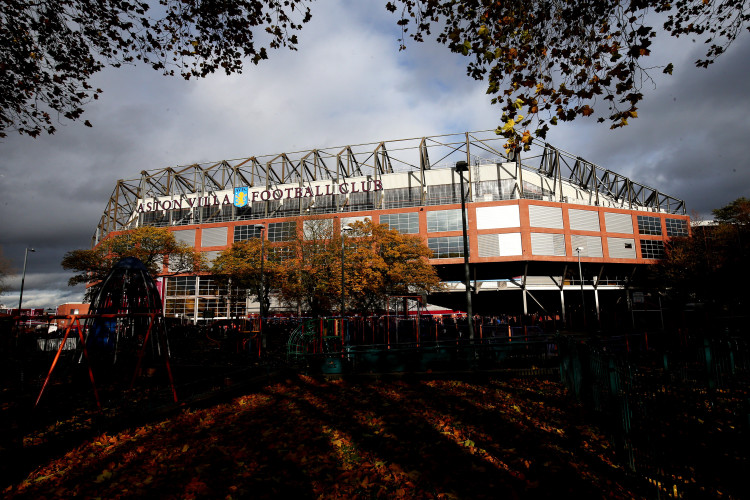


Manchester City vs Sunderland Preview: Prediction, Probable Lineups, Tactics, Team News & Stats
Manchester City vs Sunderland at the Etihad on Sunday will feature two teams that have shown promise at the start of the 2026/27 season.
Sunderland’s 1-0 victory over AZ Alkmaar in the UEFA Europa League on Wednesday sharpened the sense that this is not a routine home fixture for Manchester City. The visitors have already tested Arsenal and the high-flying Brentford, while City have won 20 of their last 30 domestic matches (D8 L2).
City will want to protect their position at the top, while Sunderland can keep their European ambitions alive with another impressive result against elite opposition to continue from where they left off last season.
For the home side, a win would extend the authority of an excellent domestic run, while a dropped result would give the chasing pack encouragement and revive questions about a defence that has recently conceded eight goals in three league matches after allowing the same total across their previous 12.
Their latest Premier League result was an impressive win over Manchester United, and the wider run remains formidable, as they have enjoyed a perfect start to life under Enzo Maresca in the Premier League. City also bring a long-standing home advantage in this fixture, having won 12 of their 14 Premier League meetings with Sunderland at the Etihad. The challenge is to turn that control into another result without allowing recent defensive looseness to make the visitors’ task simpler.
Meanwhile,Sunderland are playing for more than damage limitation. A win would move them into the top half of the table and keep their European target alive. On the flip side, a defeat would not end that pursuit but would leave them needing results elsewhere.
Their run so far has included three 1-0 victories in all competitions, including by the midweek success against AZ Alkmaar, and a 1-1 draw against Brentford. They also pushed Arsenal hard at home, dominating the second half before going down fighting. So, the Black Cats arrive with a settled tactical identity under Regis Le Bris. The absences in defence mean that preserving that structure will matter as much as finding attacking ambition.
Team News: Manchester City keep their platform; Sunderland must patch the left side
Manchester City are expected to use the 4-2-3-1 setup that has been their regular recent choice. Gianluigi Donnarumma starts behind Josko Gvardiol, Ruben Dias, Marc Guehi, and Matheus Nunes. Gvardiol has been impressive so far, contributing one goal and two assists, and his left-sided width is important to the way City support the attacking line.
The double pivot should be Enzo Fernandez and Elliot Anderson, with Rayan Cherki central behind Antoine Semenyo, Iliman Ndiaye, and Erling Haaland. Cherki has two goals, two assists, and ten key passes, giving City a genuine creator between the lines. Haaland remains the fixed reference up front, having already scored four Premier League goals and putting nine of his 16 shots on target. That is the attacking route Sunderland must deny.
Phil Foden is suspended after his red card, removing a regular attacking option from the squad, while Jeremy Doku is doubtful with a calf injury. The consequence is clearest on the right wing, where Ndiaye is expected to take the attacking role rather than City relying on the usual selection. Fernandez and Anderson should therefore provide the cover behind a more direct attacking trio.
Probable Manchester City Lineup (4-2-3-1): Donnarumma; Nunes, Dias, Guehi, Gvardiol; Anderson, Fernandez; Ndiaye, Cherki, Semenyo; Haaland
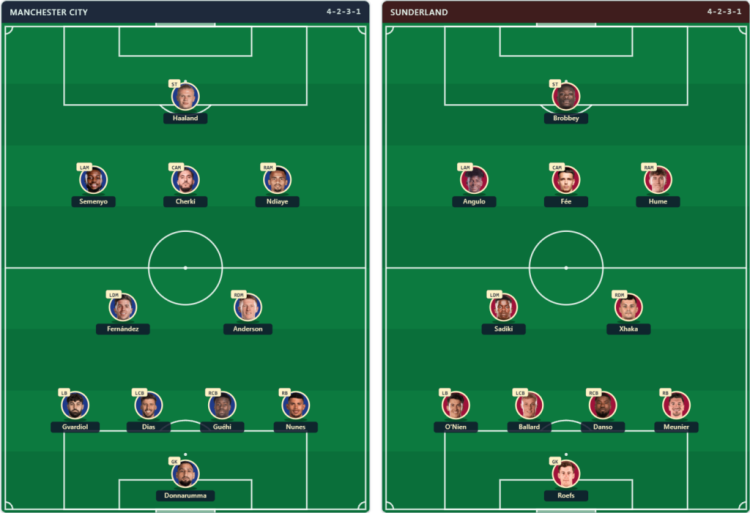
Probable Sunderland Lineup (4-2-3-1): Roefs; Meunier, Danso, Ballard, O’Nien; Xhaka, Sadiki; Hume, Le Fee, Angulo; Brobbey
Sunderland will also line up in a 4-2-3-1 formation, but their backline contains a uncertainty. Reinildo Mandava is suspended, while Omar Alderete and Aji Alese are out, leaving Luke O’Nien as an open call at left-back despite having only one appearance and one start. Dan Ballard keeps his place at centre-back after four starts, and Kevin Danso should join him on the right. Danso’s physical presence is central to Sunderland’s attempt to contain Haaland.
As for the midfield unit, Noah Sadiki is expected to pair up with Granit Xhaka in the double pivot, with Trai Hume likely to play on the right after recording four key passes and two created big chances in three appearances. Thomas Meunier should hold the right-back berth, while Enzo Le Fee starts centrally behind Nilson Angulo, Brian Brobbey and Hume.
Le Fee has started all four Premier League matches, with one goal, three key passes, and two created big chances, and his penalties and central distribution give Sunderland a way to attack without abandoning their shape. Brobbey has also started four times, though he has scored none of his six shots on target.
Tactics: Two identical shapes, two very different ways to use them
Both sides should line up in a similar shape, but the intention behind it is different. Manchester City’s double pivot gives Rayan Cherki room to receive between the lines, while the full-backs and wide attackers stretch Sunderland’s block. They are expected to carry the match to the visitors without treating it as a win-at-all-costs situation.
Sunderland, by contrast, need their two holding midfielders to protect the centre and keep the draw within reach, then release the ball quickly when possession turns over. City have a clear preference for controlling the ball. They average 69% ball dominance against a league-typical figure of 46.5%, while Sunderland sit at 47% against that same mark.
The visitors’ route is more direct, with 54.5 long balls per match against the league’s 50 average figure, compared with City’s 40. That is the central stylistic meeting. The home side will try to pin Sunderland back through sustained possession, while the Black Cats need their first forward pass after a regain to reach Brian Brobbey or Enzo Le Fee before City can recover their structure.
The contrast also explains the risk each side is likely to accept. Manchester City should attack with their established platform, keeping two midfielders behind the attacking line rather than exposing the entire team. Sunderland want to compete for the win, but they can take a draw if the match stays controlled.
Their recent chance creation against strong opponents shows that they are capable of escaping pressure. Yet City’s recent defensive record gives the visitors a reason to test the central spaces rather than simply defend. The central creator contest sits behind the main striker duel.
Rayan Cherki has to receive between Sunderland’s midfield and defence to make City’s attacking line function, while Enzo Le Fee is the home side’s hub for connecting direct releases to Brobbey and the wide players. If Cherki finds those pockets, the away side’s midfield will be forced deeper and their controlled plan will become prolonged defending. If Le Fee receives cleanly, Sunderland can keep their attacking threat alive without stretching the double pivot.
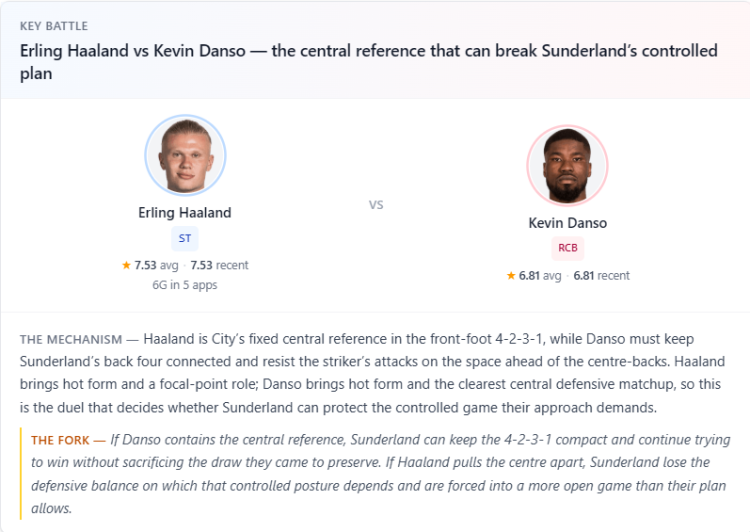
The most important collision is Erling Haaland against Kevin Danso. The former attacks the space in front of the centre-backs and gives City a fixed target for both combination play and longer passes. Danso is the defender expected to keep the back four connected, meet that movement early and prevent the striker from turning a controlled possession phase into a direct chance.
Both arrive in strong current form, but their jobs are different. Haaland wants to pull the backline apart, while Danso must preserve it. If the Sunderland defender contains his man, Sunderland can remain compact and continue competing for the win while protecting the point they would accept.
If Haaland draws Danso or Dan Ballard out of position, Sunderland lose the cover that makes their cautious attacking plan viable and may be forced into a more open game. The player who loses that exchange will not be isolated. Haaland has City’s creators and advancing full-backs behind him, while Danso depends on the two holding midfielders and the rest of the back four maintaining their distances.
Prediction: City’s edge is clear, but Sunderland can still make it uncomfortable
We are leaning towards a Manchester City home win, though it is held with medium conviction rather than treated as an automatic result. The hosts have the stronger platform for imposing the match, especially if Erling Haaland receives regularly and Sunderland’s defensive reshuffle prevents them from stepping out with confidence.
Their recent chance profile is also more stable, averaging 1.77 expected goals for and 0.62 expected goals against across the last five matches. The strongest case against Manchester City is Sunderland’s ability to make the game about their central progression rather than City’s control.
The Black Cats have already produced strong attacking performances against leading opponents, and Enzo Le Fee can connect the first release if City’s double pivot loses its spacing. The hosts’ recent defensive concessions show that possession alone will not guarantee safety.
Sunderland’s finishing has also lagged behind their chance creation, with three goals from 6.52 expected goals across the season. However, one clean break or set-piece situation could punish the home side if Kevin Danso keeps Erling Haaland quiet.
The likely range is 2-0, 2-1 or 1-1. City’s control and superior central reference make the home win the best call, but Sunderland’s structure and European-level experience leave enough room for a narrow game rather than a runaway victory.
The right-back decision could alter City’s attacking balance
The selection that remains most capable of changing the match is Manchester City’s probable right-back call. If that player can advance without leaving Elliot Anderson exposed beside Enzo Fernandez, Enzo Maresca’s charges will be able to keep Sunderland pinned while still protecting against the direct release.
If the role becomes cautious, Sunderland can keep more of their attacking shape and give Enzo Le Fee time to receive. That small adjustment may decide whether the home side’s control becomes sustained pressure or merely territorial possession.
Comment / Reply From
You May Also Like