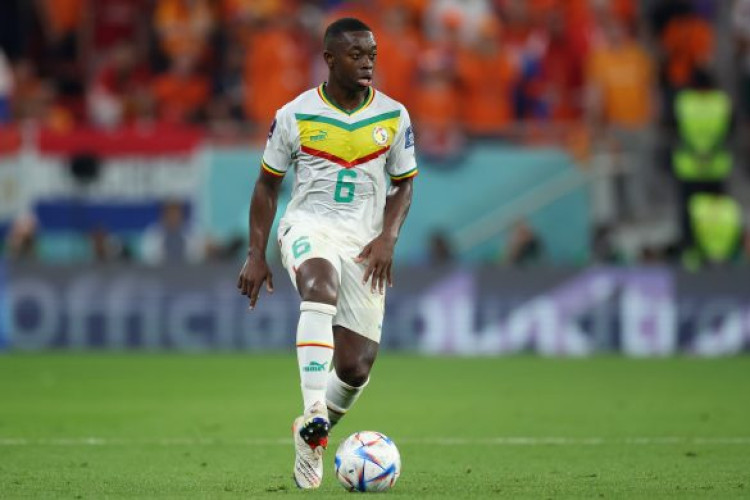

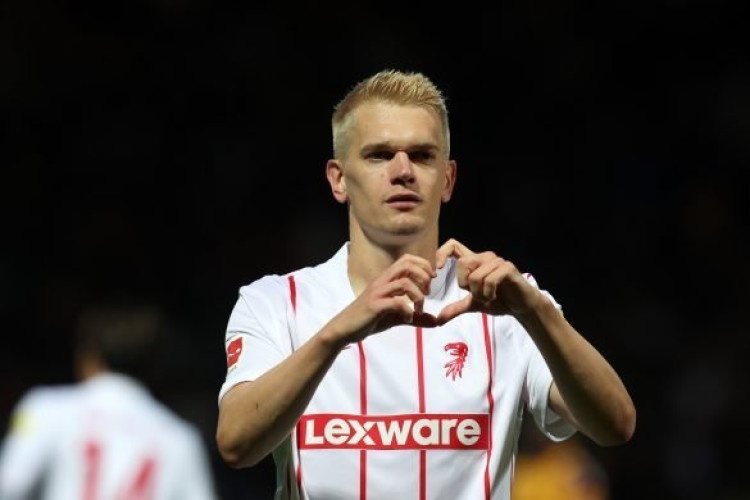
Freiburg’s Matthias Ginter and Hoffenheim’s Oliver Baumann reflect on apparent end to Germany careers
Two German veterans left out of Jürgen Klopp’s enormous first Germany squad have now responded to their respective omissions. SC Freiburg defender Matthias Ginter and TSG Hoffenheim keeper Oliver Baumann both offered up comments about their respective national-team futures.
The circumstances differ significantly. Ginter hasn’t represented Germany since June 2023 despite arguably playing some of the best football of his career over the past year. Baumann, by contrast, entered the summer as Germany’s established No. 1 before losing his place to the returning Manuel Neuer ahead of the 2026 World Cup.
Both nevertheless appear to have reached similar conclusions following conversations with Klopp. The new Bundestrainer’s first squad emphasizes the future. Ginter and Baumann recognize that their ages now work against them as Klopp prepares a team capable of competing at the 2028 European Championship in the United Kingdom and Republic of Ireland.
Ginter accepts Klopp’s decision despite strong form
Ginter’s omission comes despite the 32-year-old picking up exactly where he left off last season. The Freiburg defensive leader has already registered five scorer points in six competitive fixtures for his hometown club. The former Dortmund and Gladbach professional spent much of last spring mounting an increasingly compelling case for his first Germany call-up in nearly three years.
After turning in a Man-of-the-Match performance during Freiburg’s Europa League defeat away at Genk, Ginter scored and assisted in the spectacular return-leg comeback. Ginter confirmed afterwards that he remained in contact with then-Bundestrainer Julian Nagelsmann and expressed disappointment that another international break had passed without a nomination.
The case grew stronger still when German football legend Lothar Matthäus subsequently described Ginter’s performance against Celta Vigo as the “perfect game.” Freiburg teammates openly backed their defensive leader for a Germany return. It never arrived.
Ginter later described the period surrounding Freiburg’s Europa League final defeat and his subsequent exclusion from Germany’s World Cup squad as the most heartbreaking 12 hours of his professional career. The 51-times-capped international declined to elaborate extensively on his dealings with Nagelsmann.
“I don’t want to talk about the way things generally went over those three years,” Ginter told Kicker. “I had a very good and appreciative conversation with the [new] Bundestrainer. The performances are being noticed, but of course my age is simply the decisive issue now. I will be 34 at the time of the next tournament.
“Of course you can still play good football at 34,” Ginter continued. “But – given the age structure and the many good younger players available to fill the position – it’s absolutely understandable to me. The 2026 World Cup was probably the last realistic chance I had to return. All told, I had nine very nice years with the national team. I got to win two titles and an Olympic medal.
“I did everything in my power [to come back],” Ginter concluded. “At the moment [the German national team chapter]feels complete and I feel free [to focus on my club]. I hope this means that all the questions I’ve had to deal with over the past few months will now stop coming.”
There exists a certain historical symmetry to Ginter accepting that Germany now wish to look toward a younger generation. The Freiburg native himself earned his first senior cap at the age of 20 in March 2014 and travelled to Brazil as a member of Germany’s World Cup-winning squad several months later.
The Freiburg veteran won the 2014 World Cup, claimed Olympic silver in Rio two years later and played as a regular when Germany captured the 2017 Confederations Cup. Having once worked under Klopp at Borussia Dortmund, Ginter seemed to be comfortable with the decision of his former boss.
The sense of freedom already featured prominently when Ginter reflected on his international future during the summer. After virtually his entire professional career had involved parallel objectives at club and international level, the defender spoke of adjusting to a future in which he could focus solely on Freiburg.
Baumann accepts Klopp’s generational reset
Baumann’s path to the current omission could hardly have been more different. The Hoffenheim captain had to wait until the age of 34 to earn his first Germany cap in October 2024. Injuries and changes above him in the goalkeeping hierarchy eventually afforded one of the Bundesliga’s most consistent veterans the opportunity he had waited years to receive.
Baumann made the most of it. The TSG keeper became Germany’s preferred option during the following spring and delivered one of his finest international performances in the Nations League quarterfinal away at Italy. Five impressive saves helped Germany earn a 2-1 victory at the San Siro.
Baumann subsequently remained an important part of Germany’s World Cup qualification campaign. What once seemed an improbable late-career international breakthrough eventually placed the Hoffenheim keeper on course to start at a World Cup.
That changed when Manuel Neuer reversed his international retirement shortly before the tournament. The Bayern veteran immediately reclaimed the No. 1 position. For Baumann, that decision still hurts considerably more than Klopp leaving him out of his first squad.
Baumann revealed after Hoffenheim’s Europa League defeat against OFI Crete that Klopp informed him of the decision approximately one week before Thursday’s squad announcement. The latest omission was – in Baumann’s words – “not as bad” as what he experienced during the summer.
“He made his decision and I have to accept that,” Baumann told RTL following Thursday night’s Europa League fixture. “It’s a matter of [generational] transition. I have to be honest: what happened in the summer hurt a lot more. The way that happened was unbelievable. All I can say is: if he needs me, then I’m there — and if not, then I have to accept it.”
Klopp selected Marc-André ter Stegen, Alexander Nübel, Finn Dahmen, Noah Atubolu and Jonas Urbig across his two groups for the four forthcoming Nations League fixtures. Baumann appears to recognize that the new Bundestrainer wishes to assess other options as Germany begin preparing for a new cycle. At his Thursday press conference, Klopp even mentioned Germany U21 call-up Mio Backhaus as a keeper he very much looked forward to scouting.
A place at Euro 2028 now appears significantly more remote for a keeper who will be 38 by the time the tournament takes place. Klopp’s first squad nevertheless remains an unusual one, with 44 players divided into separate groups as the new Bundestrainer attempts to familiarize himself with as much of the German player pool as possible.
Both veterans can reasonably claim to have done little at club level to play themselves out of international consideration. Klopp’s decisions instead appear rooted in where he wants Germany to be two years from now. Ginter appears prepared to regard that explanation as the end of a decorated international career. Baumann, while accepting the same logic, remains ready should Germany require him again.
Comment / Reply From
You May Also Like