
Everton vs Ipswich Town Preview: Prediction, Probable Lineups, Tactics, Team News & Stats
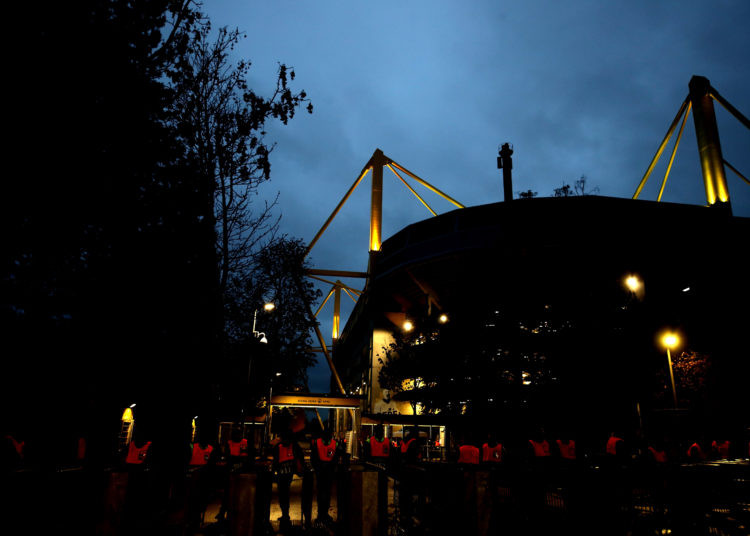
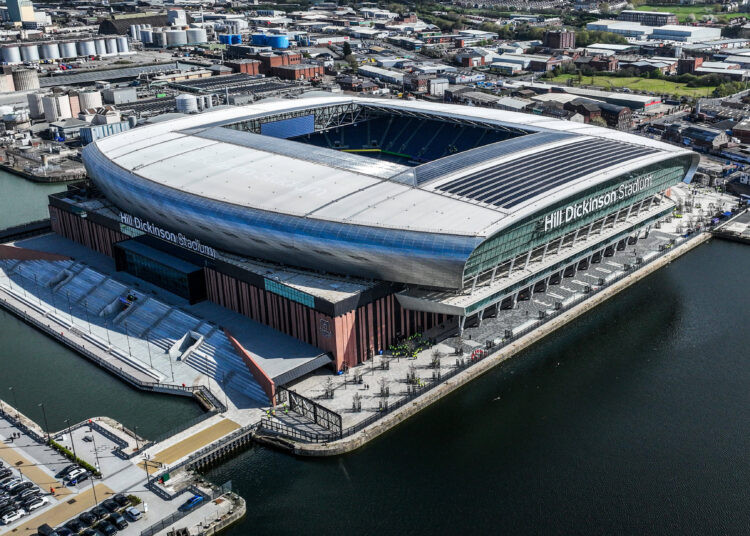
Everton vs Ipswich Town at the Hill Dickinson Stadium on Saturday will feature two teams with solid starts to the 2026/27 Premier League season, hoping to build on their recent performances.
Ipswich Town’s dramatic 90th-minute winner at Crystal Palace gave Gary O’Neil’s side a surge of momentum, even though the subsequent 4-2 defeat to Arsenal in the Carabao Cup third round showed how quickly the demands of a campaign can change for a promoted team.
Everton, on the other hand, have gone unbeaten across all competitions, including a 0-0 draw with Tottenham, a 2-2 stalemate with Manchester United, and a 1-0 win over Wolverhampton Wanderers in the EFL Cup third round. This is a meeting of two clubs aiming higher than simply survival. However, neither is yet in a position where one result defines the season.
For Everton, victory would strengthen an unbeaten Premier League start and put them into the early top-four conversation. A draw would preserve their progress, while defeat would leave their European ambition more exposed and keep the pressure on a side still trying to turn resilience into a reliable points supply.
David Moyes has a settled team and a defensive base to trust, but the short-term target is clearer at home: make their organisation count for more in attack. The run at the start of the season has brought three draws in the top flight as well as a win. So, another stalemate would feel less damaging than a loss but still like a missed opportunity.
On the other hand, Ipswich arrive with the more dramatic story. Their victory over Crystal Palace has kept the mood high around a newly promoted team exceeding expectations, and three points here would carry them into the same early top-four range. However, defeat would hurt the momentum, though it would not be catastrophic.
Their Premier League record has alternated between wins and losses, while the cup defeat after heavy rotation underlined the need to protect the structure that has carried them forward. Everton can afford to push for the win inside their shape. Ipswich are more likely to attack without making the match unnecessarily open.
Team News: Everton keep their core, while Ipswich replace midfield cover
Christian Norgaard is out for Everton with a groin injury, expected to return in October. The Danish midfielder’s absence removes an experienced holding option. So, James Garner should take the deeper role alongside Harrison Armstrong rather than Everton using the extra midfielder from the start.
Everton should retain the 4-2-3-1 formation they have used in three of their four Premier League matches, with Jordan Pickford behind a back four of Vitaliy Mykolenko, Jarrad Branthwaite, James Tarkowski, and Ainsley Maitland-Niles. Branthwaite has also played every minute and carries a 7.2 average rating. That established central pairing is the foundation of the home side’s solid base.
Garner and Armstrong should line up in the double pivot behind Kiernan Dewsbury-Hall, with Tyrique George and Jack Grealish providing the wide attacking support for Thierno Barry. Dewsbury-Hall is the main link between the midfield and the striker; he has nine key passes and two big chances created, both from four starts.
Grealish brings the more experienced 1v1 option from the left, while Barry remains the central reference after recording one goal and four shots on target from fourteen attempts. Maitland-Niles gets the right-back call after scoring as a substitute against Manchester United, and his role matters because Everton need that flank to support the front-foot plan without losing its defensive balance.
Probable Everton Lineup (4-2-3-1): Pickford; Maitland-Niles, Tarkowski, Branthwaite, Mykolenko; Armstrong, Garner; George, Dewsbury-Hall, Grealish; Barry
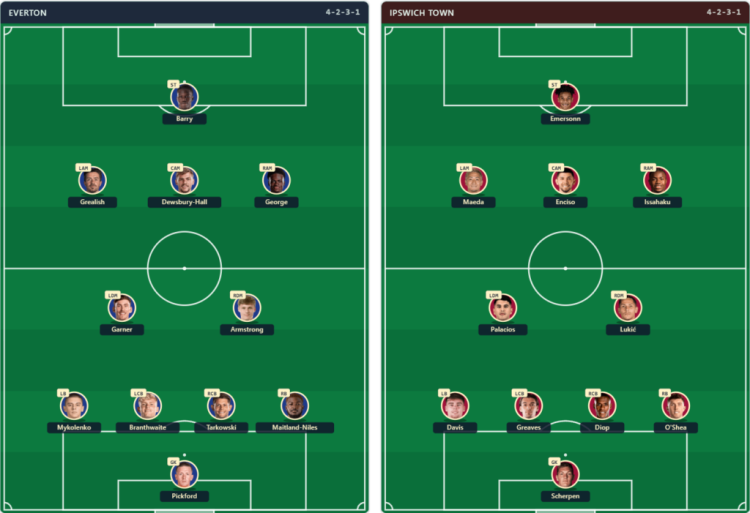
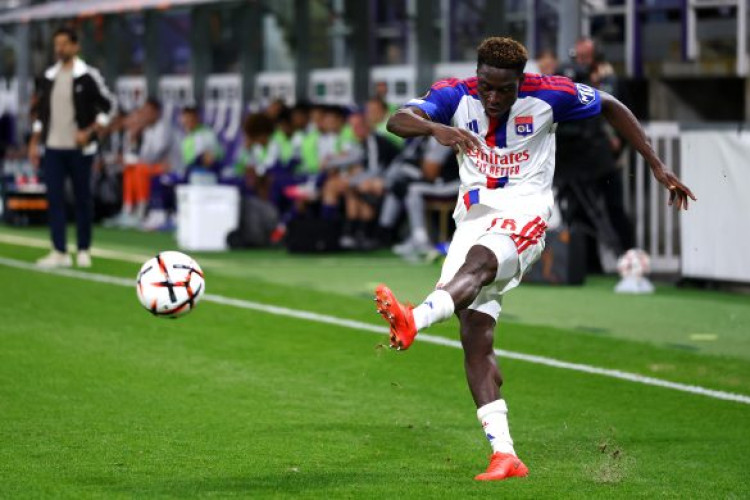
Probable Ipswich Town Lineup (4-2-3-1): Scherpen; O’Shea, Diop, Greaves, Davis; Lukic, Palacios; Fatawu, Enciso, Maeda; Emersonn
Jack Taylor is unavailable for Ipswich after knee surgery, leaving their midfield selection with less depth and making the probable calls of Exequiel Palacios and Sasa Lukic more important. The visitors are also expected to use a 4-2-3-1 setup, a settled choice across all four Premier League matches.
Kjell Scherpen should feature between the sticks behind Dara O’Shea, Issa Diop, Jacob Greaves, and Leif Davis. Davis is the standout selection on that side of the pitch. He has two goals, one assist, and four key passes in four appearances, giving Ipswich a genuine attacking route from left-back rather than asking the wide forward to create everything.
Palacios and Lukic are the probable pair in the double pivot behind Julio Enciso, with Daizen Maeda the less certain call on the left, Abdul Fatawu Issahaku on the right and Emersonn up front. Enciso has provided two assists and created two big chances, while Fatawu leads the squad for key passes with seven and has created three big chances.
Emersonn gives the attack its sharpest current outlet, with two goals, one assist, and three shots on target from seven attempts, showcasing his impressive finishing. Maeda has started three times in the Premier League, but his place carries more uncertainty than the rest of the attacking line.
Tactics: Both 4-2-3-1 setups must progress without taking away their cover
Everton’s 4-2-3-1 setup is built to put Kiernan Dewsbury-Hall between the lines while keeping two midfielders in front of the centre-backs. It allows David Moyes’s side to carry the game forward without abandoning the compactness that has defined the unbeaten start.
Everton’s measured profile supports that identity. They have kept an average of 42% possession, while Ipswich average 42.5%, with both below the league’s typical figure of 46%. Neither side is likely to dominate the ball simply by default. The difference is in how each team uses the phases it does control.
Everton contest a physical match, with 96 duels per game against Ipswich’s 87.5, while Everton send 48.5 long balls per match and Ipswich 44, both below the average Premier League figure of 50.5. Those figures point to two sides comfortable playing below sustained possession levels, but Everton are more willing to make the game a contest for territory and second balls.
Their chosen approach is positive without being reckless. The Toffees should come after Ipswich, but keep the two-man protection behind the attack. Ipswich Town’s shape protects the same central relationships that have carried them through the opening matches. Julio Enciso can receive behind Emersonn. Leif Davis can advance from the left.
Meanwhile, the two central midfielders can remain close enough to protect the back four. They are not required to chase the match at any cost. O’Neil’s side should take the win if Everton leave it available, but it can also settle into a draw-compatible game rather than opening the spaces that would make the home side’s attacking midfield more dangerous.
The broader tactical question is whether Ipswich can advance without needing to control the match. Everton’s recent chance production has occasionally suffered when they accept a low-control contest. So, their front four must turn territorial pressure into proper opportunities rather than merely forcing Ipswich backwards.
At the other end, Ipswich Town’s defensive record makes the home side’s structure a direct test. Everton need enough support around Barry to attack the spaces in front of the centre-backs, while the Tractor Boys need Davis and Fatawu to give them an exit route before Everton’s pressure becomes sustained.
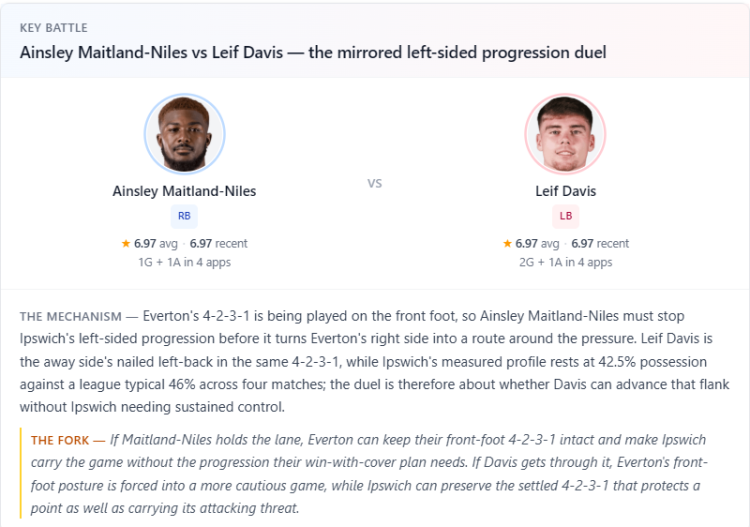
The clearest wide contest is Aisnley Maitland-Niles against Leif Davis. The Everton summer arrival has the job of stopping Ipswich Town’s left-sided progression before Davis can move the ball beyond the home side’s first line and turn their right into an escape route. Davis, meanwhile, has the quality and current attacking output to make Everton defend deeper than they intend.
If Maitland-Niles holds the lane, Everton can keep their positive 4-2-3-1 and make Ipswich play without the progression that makes their balanced approach work. If Davis gets through, the Merseyside outfit may have to protect a deeper game, allowing Ipswich to keep their shape and pursue the match without sacrificing the draw.
Behind that duel sits the central battle between Jarrad Branthwaite and Emersonn. The former has looked reliable in the defensive pairing, while the Brazilian striker arrives with the sharper scoring form and is the outlet Ipswich need when they bypass pressure.
If Branthwaite controls that lane, Everton can keep their midfield cover behind the attack and prevent Ipswich from converting clearances into territory. If Emersonn wins the first contact or receives cleanly after it, the Toffees’ forward posture becomes harder to maintain and Ipswich can attack with the protection of their settled midfield two.
Prediction: Everton have the narrow edge, but not enough for a strong bet
We are leaning towards an Everton win, though it is a low-confidence call rather than a result to treat as secure. The home side’s structure offers the clearer route to making the match uncomfortable for Ipswich Town.
The front four can work against a defence that has allowed 1.71 expected goals per match, while Everton’s own attacking process has produced 1.24 expected goals per game. That is a narrow edge, not evidence of a dominant home performance.
Lean: Everton win
Range: 1-0/2-1/1-1
Everton’s defensive resilience is the reason the home lean survives the uncertainty. They have kept two clean sheets in four matches, whereas Ipswich have conceded ten league goals. The strongest case against Everton is that Ipswich’s attack has finished 1.822 goals above expectation this season.
If Emersonn remains an effective outlet and Davis can progress from the left, Ipswich can make the home side retreat and turn a controlled away plan into a genuine chance of winning. The likely scoreline range is 1-0, 2-1 or 1-1.
The last variable is Ipswich Town’s left-sided attacking call
Daizen Maeda’s expected selection is the remaining call with the clearest potential to change the balance. If Ipswich use that side aggressively, Leif Davis can receive support and make the away side’s route out more reliable; if Everton keep that combination pinned back, the visitors may struggle to turn their possession into forward territory. That decision could determine whether this stays a narrow home advantage or becomes the open contest Ipswich’s recent momentum is inviting.
Comment / Reply From
You May Also Like