
Why Liverpool’s Bradley Barcola and PSG’s Désiré Doué weren’t nominated for the Ballon d’Or
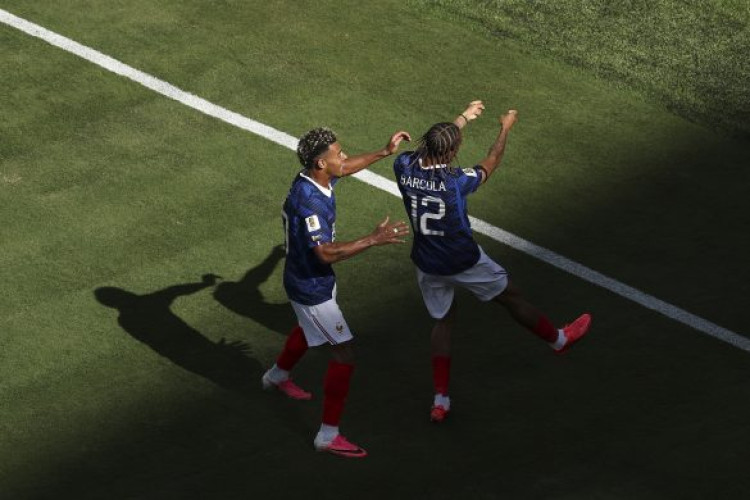
The list of the 30 Ballon d’Or nominees has been revealed. And with it, unsurprisingly, the usual dose of controversy. However, if one issue has fuelled the controversy in particular, it is undoubtedly the combined omissions of Bradley Barcola (24) and Désiré Doué (21).
Having both enjoyed yet another successful season with Paris Saint-Germain – with whom they won, notably, the Champions League, the UEFA Super Cup and Ligue 1 – and with the French national team, the now former club teammates have nevertheless seen other players chosen ahead of them.
A decision as questionable as it is controversial, regarding which Vincent Garcia, editor-in-chief of France Football – the event’s organiser – felt compelled to offer some further explanation in an article published in L’Équipe.
“Out goes Désiré Doué, who has often shared the limelight and the statistics with Bradley Barcola. Their status as interchangeable players, both at club level and for Les Bleus, and their lack of consistency throughout a season marked by alternating spells of good form and time on the bench, did not help their individual records,” the journalist wrote.
Appearing as a guest on the programme L’Équipe de Greg, Olivier Bossard, also a journalist for France Football, explained that Barcola had “received very few votes”, whilst Doué finished “31st or 32nd on the list”.
“Right up to the end, some people tried to get him into the top 30. But those who didn’t include him ultimately felt that the competition had worked against him, particularly the competition with Barcola. One moment it was Barcola, the next it was him.”
“In the French national team, we had the impression that Doué was in the lead, but in the end, at the last moment, Barcola proved to be the better player and was used more by Deschamps (…) You have to make a real impact to be on this list, and it was felt that he had made less of an impact than the previous season and that he’d found it a bit hard to come to terms with,” he concluded.
Comment / Reply From
You May Also Like