
FIFA World Cup 2026 Team Spotlight: Spain – Can Luis de la Fuente’s youth-fueled squad go the distance?
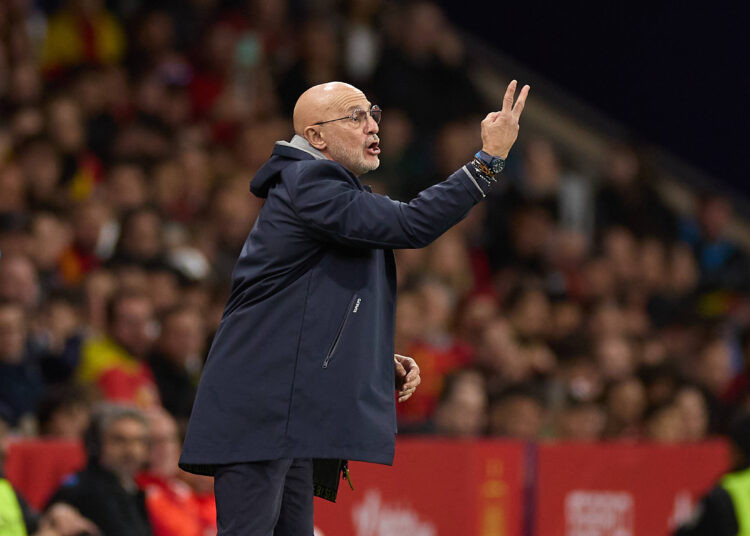
Welcome to Team Spotlight, and today, we analyse Spain’s style, form, key players, and predictions as Luis de la Fuente finalises his preparations for the 2026 FIFA World Cup.
Spain are one of the most consistent performers in FIFA World Cup history, having qualified for 16 out of 22 tournaments, a remarkable record that speaks to the nation’s footballing DNA. They are gearing up for their 13th consecutive participation in the world event.
Their crowning achievement came in 2010 when they lifted their first and only World Cup trophy in South Africa, a triumph built on the tiki-taka philosophy that revolutionised modern football. Yet, despite this pedigree, the last 16 years have been marked by agonising near-misses and premature exits that have left fans yearning for more.
The narrative surrounding Spain at World Cups has become one of unfulfilled potential. Since their 2010 triumph, La Roja have reached the Round of 16 twice (2018 and 2022), with the group stage exits in 2014 being particularly disheartening.
The 2018 and 2022 campaigns ended in penalty shootout defeats to Russia and Morocco, respectively, raising eyebrows across Europe. However, the momentum has shifted dramatically in recent years.
Under Luis de la Fuente, Spain have transformed into a dynamite force, capturing the UEFA Euro 2024 title with a record-breaking 15 goals scored, a triumph that signalled La Roja’s return to the pinnacle of international football.
Now, as the 2026 World Cup approaches in North America, all eyes are on whether this golden generation can finally convert their European success into World Cup glory.
Road to FIFA World Cup 2026: A qualifying masterclass
Spain’s journey to the 2026 World Cup was nothing short of commanding. In UEFA Group E, La Roja finished top with an unbeaten record: 5 wins and 1 draw from 6 matches, remaining unbeaten throughout the campaign. The solitary draw came against Turkiye in a 2-2 thriller in Seville.
The underlying numbers were impressive. Spain dominated possession to an average of 65% per match, completed 612 passes per game with an 87.4% completion rate, and generated an average xG of 2.31 per match, the second-highest in UEFA qualifying.
The attacking output was staggering. Spain scored 21 goals in 6 qualifiers, including a 6-0 win over Turkiye, a 4-0 win over Georgia and a 4-0 victory against Bulgaria. Their defensive solidity was equally noteworthy, as they kept 5 clean sheets in 6 matches.
Turkey’s 2-2 draw was the only blemish, but Spain still qualified with authority. This was not just winning; it was a masterclass in positional dominance, pressing intensity, and attacking fluidity. Luis de la Fuente’s Spain did not just qualify; they announced themselves as genuine World Cup contenders, equaling Italy’s 31-match unbeaten record in the process.
The Architect: Luis de la Fuente and his tactics
Luis de la Fuente has orchestrated a tactical revolution at Spain, transforming La Roja from the rigid, slow-paced tiki-taka of the past into a dynamic, quick attack system that combines fluid positional play with direct wing attacks and robust defensive structures.
At Euro 2024, Spain averaged 63% possession and bagged a total of 15 goals, a balance that made them both unbreakable at the back and lethal in forward transitions. De la Fuente became Spain’s senior manager in December 2022, taking over after the 2022 World Cup and guiding the team to Euro 2024 and 2023 Nations League glory.
His philosophy centres on three core principles: positional fluidity, quick vertical transitions, and overloading wide channels. Unlike the traditional tiki-taka that prioritised possession for its own sake, Spain, under the 64-year-old, use possession as a weapon to create space for rapid attacks.
The team’s pressing triggers are sharp, with Spain regaining possession in the attacking third an average of 7.8 times per match. This high-intensity approach has made them remarkably adaptable, capable of dominating against weaker sides while remaining competitive against elite opposition.
His tournament record speaks for itself. Spain were Euro 2024 champions, breaking the European Championship goals record with 15 goals. They became the most successful nation in Euro history with 4 titles, and their manager’s ability to integrate youth while maintaining tactical discipline has earned him comparisons to Vicente del Bosque, the architect of Spain’s 2008–2012 golden era.
The Squad: the rise of a youth-enabled revolution
The headline of Spain’s 26-man squad is undeniably 18-year-old Lamine Yamal, the Barcelona winger who has become the face of this exciting young generation. Entering his first World Cup with the sport at his feet, the teenage sensation has already become Spain’s most-watched player, blending technical brilliance with maturity beyond his years.
Yamal became Spain’s youngest ever player at 16 years and 57 days, and his emergence as a leader at such a young age signals a shift in Spain’s approach, from relying on veterans to empowering the next generation.
Squad:
Goalkeepers: Unai Simon (Athletic Club), David Raya (Arsenal), Joan Garcia (Barcelona)
Defenders: Pedro Porro (Tottenham Hotspur), Marcos Llorente (Atletico Madrid), Aymeric Laporte (Athletic Club), Pau Cubarsi (Barcelona), Marc Pubill (Atletico Madrid), Eric García (Barcelona), Marc Cucurella (Chelsea), Alejandro Grimaldo (Bayer Leverkusen)
Midfielders: Rodri (Manchester City), Martin Zubimendi (Arsenal), Pedri Gonzalez (Barcelona), Fabian Ruiz (PSG), Mikel Merino (Arsenal), Gavi (Barcelona), Alex Baena (Atletico Madrid)
Forwards: Mikel Oyarzabal (Real Sociedad), Lamine Yamal (Barcelona), Ferran Torres (Barcelona), Borja Iglesias (Celta Vigo), Dani Olmo (Barcelona), Víctor Munoz (Osasuna), Nico Williams (Athletic Club), Yeremy Pino (Crystal Palace)
Interestingly, Spain’s 2026 squad has no Real Madrid players, making it the first time in history a Spanish World Cup squad has excluded Los Blancos players from consideration. This is a bold statement from de la Fuente, who has prioritised form and tactical fit over club prestige. The squad is a blend of youth and experience, with Barcelona players like Pedri, Gavi, Ferran Torres, Lamine Yamal, Pau Cubarsi, and Dani Olmo forming a core that shares club chemistry.
Key Players: Stars who could define Spain’s campaign
Rodri
Rodri’s impact on Spain’s midfield is immeasurable. The Manchester City powerhouse has made 61 appearances for Spain, maintaining a 90%+ pass completion rate in international matches. His Ballon d’Or 2024 victory cemented his status as the world’s best midfielder, and his ability to control tempo makes him indispensable.
However, since returning from an ACL injury in September 2024, the experienced midfielder has not hit top gear consistently and has endured persistent fitness issues. Pep Guardiola admitted he “returned too early” from injury. The question remains whether he has fully recovered to his peak form.
Mikel Oyarzabal
Oyarzabal has been Spain’s most reliable goalscorer in recent tournaments. He has 24 goals in his 52 outings for his national team. At Real Sociedad, the 29-year-old scored 15 goals in 34 La Liga appearances this season. His ability to score in crucial moments makes him indispensable for Spain’s attack.
However, the Real Sociedad skipper’s injury history is concerning. He has missed a few games through injury over the last 18 months. Additionally, his form fluctuations raise questions about his World Cup readiness.
Unai Simon
Despite a mediocre season at Athletic Club (54 goals conceded in 37 La Liga matches), Simon remains Luis de La Fuente’s preferred goalkeeper over David Raya and Joan Garcia, both of whom have excelled at the club level. His international experience (57 caps) and big-game presence make him the primary choice.
However, Simon’s season has been below par, as he conceded close to two goals per game compared to David Raya and Joan Garcia’s heroics for Arsenal and Barcelona, respectively. His shot-stopping has been questioned, and critics argue that Raya or Garcia deserve the starting spot based on club form alone.
Marc Cucurella
Cucurella has made 23 appearances for Spain, contributing 1 goal and 2 assists from left-back while maintaining a strong defensive work rate. His dribbling success rate (78%) and ability to overlap make him a modern full-back who can contribute to Spain’s attacking overloads.
However, the 27-year-old has not been at his best this season at Chelsea, suffering due to the club’s struggles at large in the Premier League. He made only 1.2 tackles per 90 compared to his previous 1.8 tally. His form dip raises concerns about his World Cup readiness, especially against elite wingers.
Notable Absentees: The shock omissions
Four players’ exclusion sent ripples through Spanish football:
| Player | Club | Reason for Omission |
|---|---|---|
| Dani Carvajal | Real Madrid | Injury concerns; de la Fuente preferred healthier options despite Carvajal’s 52 caps |
| Dean Huijsen | Real Madrid | Defensive depth overlooked despite promising La Liga performances |
| Pablo Fornals | Real Betis | Creative midfield options prioritised over his experience |
| Jorge de Frutos | Rayo Vallecano | Pace and dribbling were left unused; Nico Williams preferred |
Carvajal was omitted despite being one of their most experienced players and leading them in several games. The omissions suggest Luis de la Fuente is betting heavily on youth and form over reputation, a calculated risk in a tournament where benches can decide matches.
Fixtures: Group H – Favourable draw
Spain face Cape Verde, Saudi Arabia, and Uruguay in Group H:
-
June 15: Spain vs Cape Verde (Atlanta, Mercedes-Benz Stadium); first-ever meeting; expected win, but Cape Verde’s underdog spirit could cause problems.
-
June 21: Spain vs Saudi Arabia (Dallas, AT&T Stadium); Saudi Arabia have been improving; Spain won the three previous meetings.
-
June 26: Uruguay vs Spain (Houston, NRG Stadium); Spain are unbeaten in ten previous meetings. However, this is a game that might decide who finishes top of the group
Spain are expected to top the group, but Uruguay’s physicality and Cape Verde’s defensive discipline could complicate matters. Uruguay, in particular, pose a threat, as they have historically been a tough opponent for Spain.
Prediction: Semi-Finals
Spain will reach the semi-finals at the 2026 World Cup. La Roja have already won UEFA Euro 2024 under Luis de La Fuente, and they play one of the most exciting brands of football in international competition. With multiple Barcelona players (Lamine Yamal, Pedri, Gavi, Ferran Torres, Dani Olmo, Pau Cubarsi) likely to start, they will possess chemistry like no other team.
While Spain have the quality to challenge for the trophy, a final appearance feels slightly beyond them. Teams like France, Argentina, and even England remain stronger on paper, and Spain’s lack of World Cup knockout success since 2010 could be exposed.
However, La Roja’s youth, tactical flexibility, and the manager’s proven track record in tournaments make them dark horses to reach the final four. The 16-year drought since Spain’s last World Cup final (2010) might end, but the semi-finals feel like the realistic ceiling.
Comment / Reply From
You May Also Like