
No Identity, No Fire: Three reasons Liverpool should fire Arne Slot today
Liverpool find themselves at a crossroads where sentiment, history, and finances all point to the same conclusion: Arne Slot’s tenure should end now if the club want to rescue Champions League qualification.
With Liverpool stuck in fifth after 30 games, having just dropped more points at home to a spiralling Tottenham Hotspur side, every week of drift risks turning a wobble into a full-blown collapse under Arne Slot. The Hard Tackle opines why the Dutch tactician should be shown the door at Anfield.
A giant flirting with failure
Liverpool’s current situation under Arne Slot is stark. They sit fifth on 49 points after 30 Premier League matches, outside the UEFA Champions League spots and with their margin for error evaporating. Aston Villa occupy the fourth spot with 51 points, and Arsenal and Manchester City are pulling away in the title race, turning the Merseyside club’s season into a desperate scramble rather than a genuine challenge.
This is not happening in a vacuum. Liverpool’s recent results include a last-minute defeat to bottom-side Wolves and now a late equaliser conceded at home against a Tottenham team in crisis, all in the middle of a UEFA Champions League qualification push. These are exactly the kind of moments a serious top-four side finds a way to navigate, and the kind of slips that become defining when the table is settled in May.
For a club that has spent heavily last summer with an eye on both an on-pitch reboot and the guaranteed revenue stream of Champions League football, failure to finish in the top four would be more than a sporting disappointment. It would be a financial and reputational blow for an institution that brands itself as one of the biggest clubs in world football.
Identity crisis after Klopp
The first and most glaring argument for change is the collapse of a clear, coherent footballing identity under Arne Slot. Jurgen Klopp’s Liverpool were defined by high-octane pressing, vertical attacks and an intensity that overwhelmed opponents and energised Anfield. That “heavy-metal” identity was not just aesthetics; it was a competitive edge and a cultural pillar.
Under Slot, that edge has dulled. Too often, Liverpool now resemble a side content to play in second gear: low-intensity pressing, long sterile spells of sideways passing, and an attacking structure that feels functional rather than ferocious. The raw numbers underline the malaise.
Against Tottenham, Liverpool registered 17 shots but only four on target, a recurring pattern of promising positions wasted by a lack of clarity, conviction and cutting edge in the final third. Arne Slot himself has repeatedly framed these games as ones Liverpool “should have killed” but somehow did not.
After the 1-1 draw with Spurs, he admitted his side failed to score the second goal despite multiple counter-attacking opportunities and acknowledged it was “definitely two points lost” at home. That language is telling: Liverpool are constantly stuck in the space between “almost” and “not quite”, a side that can dominate phases but rarely impose its will over 90 minutes.
The contrast with Klopp’s era is brutal. Under the German tactician, Liverpool’s identity did not just help them win; it intimidated opponents before a ball was kicked. Now the team looks like it has been tactically softened. The pressing is less coordinated, the transitions more tentative, and the build-up slower and safer.
For a club whose modern brand has been built on emotion, intensity and chaos, this diluted, joyless version of Liverpool is an existential problem. If there is no clear philosophy to cling to and no obvious progression in performances, the manager’s position becomes harder to defend. Keeping Arne Slot is effectively betting that a vague, half-formed identity will suddenly crystallise in the final weeks of a high-pressure run-in. Liverpool do not have that luxury of time.
Motivation and intensity have collapsed
The second major fault line under Arne Slot is effort and intensity. At their peak under Jurgen Klopp, Liverpool outran and outworked almost everyone in Europe. The badge stood for relentlessness: pressing in waves, winning second balls, turning games into physical and mental sieges that opponents struggled to survive.
Those days feel very distant. The 1-1 draw with Tottenham has become emblematic of the decline: Spurs, a team described as “spiralling” and battling relegation form, outran Liverpool by around 9km on the night, despite being the away side. That gap is not about tactics alone; it is about sharpness, desire and collective buy-in to the manager’s demands.
Spurs covered 9km more than Liverpool
Outran Liverpool by 15%!!!
— SimonBrundish (@SimonBrundish) March 15, 2026
When a squad with Liverpool’s talent and depth is consistently being outworked, it is impossible not to look at the man at the top. You can question individual players’ professionalism, but across a whole group over a stretch of games, the pattern usually points back to the training ground and the dressing-room message. Are the standards high enough? Is the tactical plan energising the players or draining them? Do they truly believe in what they are being asked to do?
Recent evidence suggests they do not. In key games this season, Liverpool have repeatedly faded late, conceding injury-time goals against Wolves, Bournemouth and others, haemorrhaging points from winning positions. That points to a mix of physical and mental frailty, exactly the aspects that were once Liverpool’s greatest strengths.
In the modern Premier League, intensity is non‑negotiable for a top-four side. When the manager cannot coax maximum physical and psychological output from a squad built to press and run, the problem is systemic. Changing the manager is not a guarantee that the old fire returns, but there is little to suggest that persisting with Arne Slot will suddenly flip that competitive switch back on.
Losing the fans: the final red line
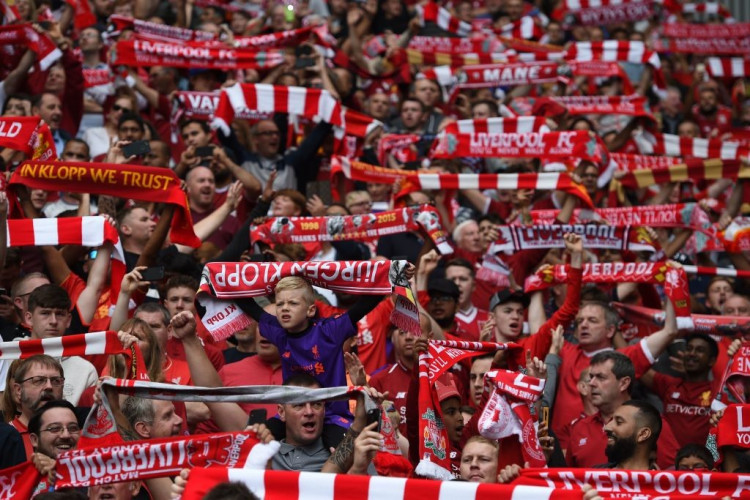
For a club like Liverpool, there is one red line that simply cannot be crossed: losing Anfield. Jurgen Klopp and his players built an era on the feedback loop between the team’s intensity and the crowd’s electricity. It turned big European nights and title run-ins into something close to inevitable; opponents felt the stadium long before they felt the players.
That bond is now fraying. Dominik Szoboszlai’s post-match comments after the Tottenham draw were remarkably blunt. He revealed that fans have been leaving around the 80-minute mark in recent games and insisted, “it doesn’t help us at all…stick with us.” This was not an offhand remark. It was a public acknowledgement from a key player that the atmosphere is turning and that Liverpool’s own supporters are disengaging from what they are watching.
Dominik Szoboszlai: “I don’t think it helps us that after 80mins people start to go home. Everyone is noticing that and when we concede a goal still people are leaving the stadium. I understand the frustration but we need them. I think it should be normal that in hard times we…
— James Pearce (@JamesPearceLFC) March 16, 2026
This is not the Anfield of lore, where fans stay to the final whistle, willing impossible comebacks into existence. It is a fanbase voting with its feet, weeks before the season is even decided. They are not only frustrated with the results; they are exhausted by the lifeless football.
When both performances and atmosphere are in decline, the manager’s position becomes almost untenable at a club whose identity is so intimately tied to its supporters. Keeping Arne Slot now is essentially asking fans to tolerate more of the football that prompts them to walk out early. For an ownership and hierarchy acutely aware of brand, global reach and matchday optics, that is a risk that cuts far beyond the touchline.
Why acting now still makes sense
The most compelling argument against a mid-season sacking is usually disruption: changing the manager in March can feel like an admission of failure, making everything worse. But Liverpool’s situation is different. Because the table remains tight, there is still a plausible path to the top four if a new manager can spark even a short-term bounce.
Liverpool are only two points off fourth with eight games to go. In a normal season, that would be a platform, not a crisis. But the trend line under Arne Slot is downwards: late collapses, stuttering attacking play, growing fan unrest and dwindling intensity. Standing still in that context is not neutral; it is actively dangerous. Every dropped point now not only damages this season but also jeopardises next year’s transfer plans, wage structure and long-term sporting project.
There is also a psychological dimension. A decisive change would send a clear message to the dressing room and the fanbase that mediocrity will not be tolerated. It would break the cycle of fatalism that has crept in around late goals conceded and leads squandered. A new manager does not have to reinvent Liverpool in two months; they simply need to stabilise, simplify and reconnect the team to the core principles that made it successful: intensity, bravery and a front-foot approach.
In many ways, sacking Slot now is less about punishing one man and more about protecting the club from drift. The warning signs are everywhere: a muddled footballing identity, a squad whose physical and mental edge has blunted, and supporters who are no longer prepared to sit through 90 minutes of sterile, low-energy football. The season is still salvageable, but only if Liverpool are ruthless enough to act before the slide becomes irreversible.
If Liverpool’s hierarchy truly believes they are custodians of one of the game’s great institutions, they cannot allow another Anfield afternoon to end with early exits, late concessions and a manager talking once again about chances that should have been taken. The time to make the hard decision is now, before fifth becomes their ceiling rather than a temporary setback.
Comment / Reply From
You May Also Like